
Melissa Cijntje
Fellowship Residency: ongoing 2026
Meet & Greet: 22 May
Exhibition: 8 - 11 October
Opening: 8 October
Meet Me Under the Tree is the outcome of artist Melissa Cijntje’s fellowship residency at Hotel Maria Kapel this year. The domino table becomes a place where stories are exchanged, memories are carried, arguments are had, laughter is shared and community is formed. In Curaçao, the domino table can exist anywhere: outside a home, or in the streets, beneath the shade of a tree. It creates a space of connection.


The plaques around the table refer to Hoorn’s colonial history and how it is preserved and displayed in public space. While some plaques point to systems of power and violence, others reflect Caribbean continuity, resilience, and pride. The plaques bring histories into conversation, questioning what is remembered, what is left out, and how these histories shape the present.
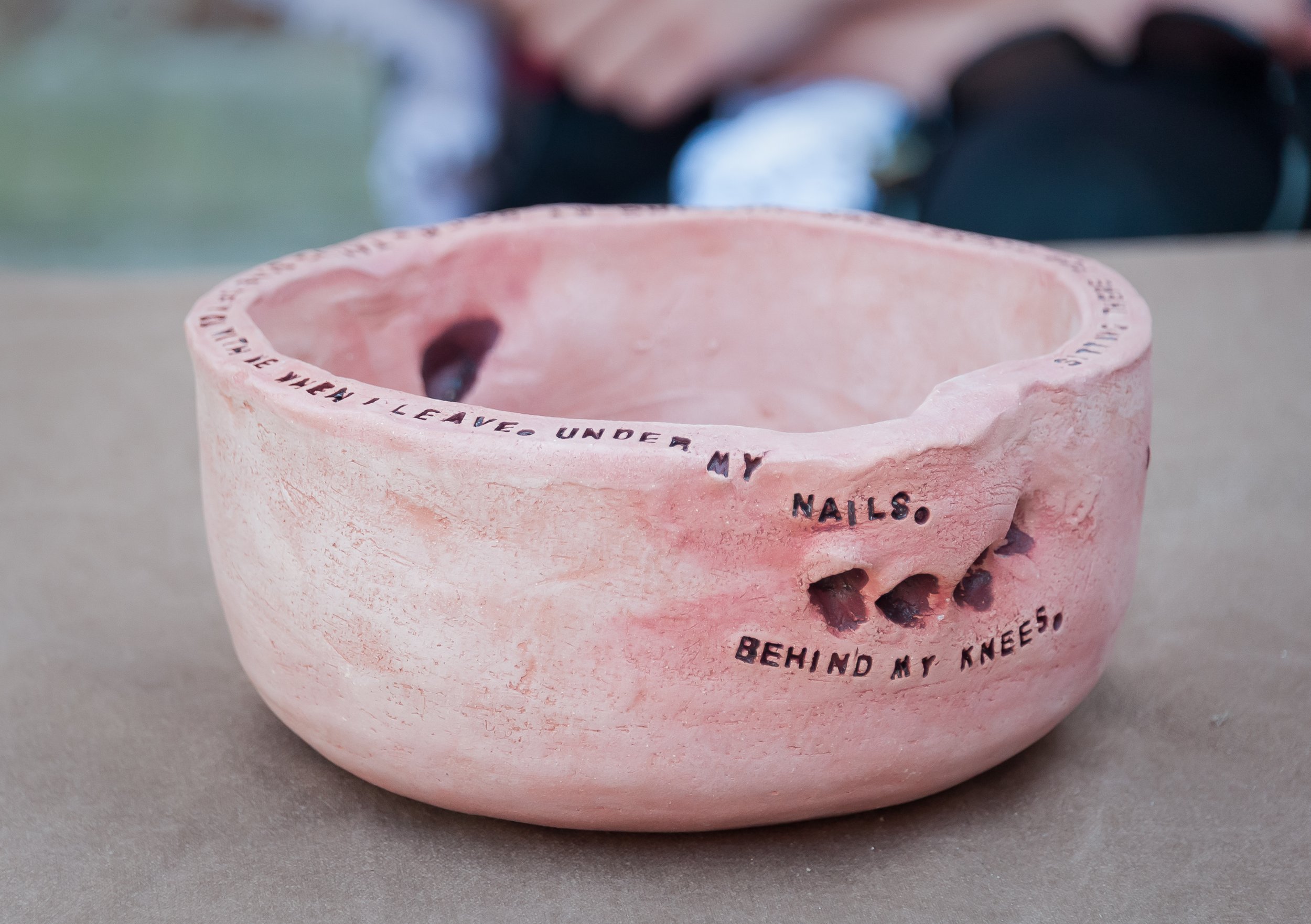
The ceramic bowls, the vessels as Melissa calls them, carry historical memory. “I see vessels as directly connected to people: we are vessels, having arrived through vessels. Our vessels carry the trauma, stories, and culture across the Atlantic.” – Melissa Cijntje. The vessels stand for generational trauma, fragility, and transformation, expressing collective scars across generations. Surfaces marked by touch, pressure, greed, and erosion carry traces of memory.
The work asks how history is remembered and who has the authority to shape memory. There is a tension between colonial heritage’s visibility in Hoorn and the dismissal of colonial violence as belonging to the distant past. Melissa wants Meet Me Under the Tree to engage with this contradiction through reworking historical materials, symbols, and systems of display, acknowledging a painful history while reclaiming it, as the Caribbean did with dominoes.
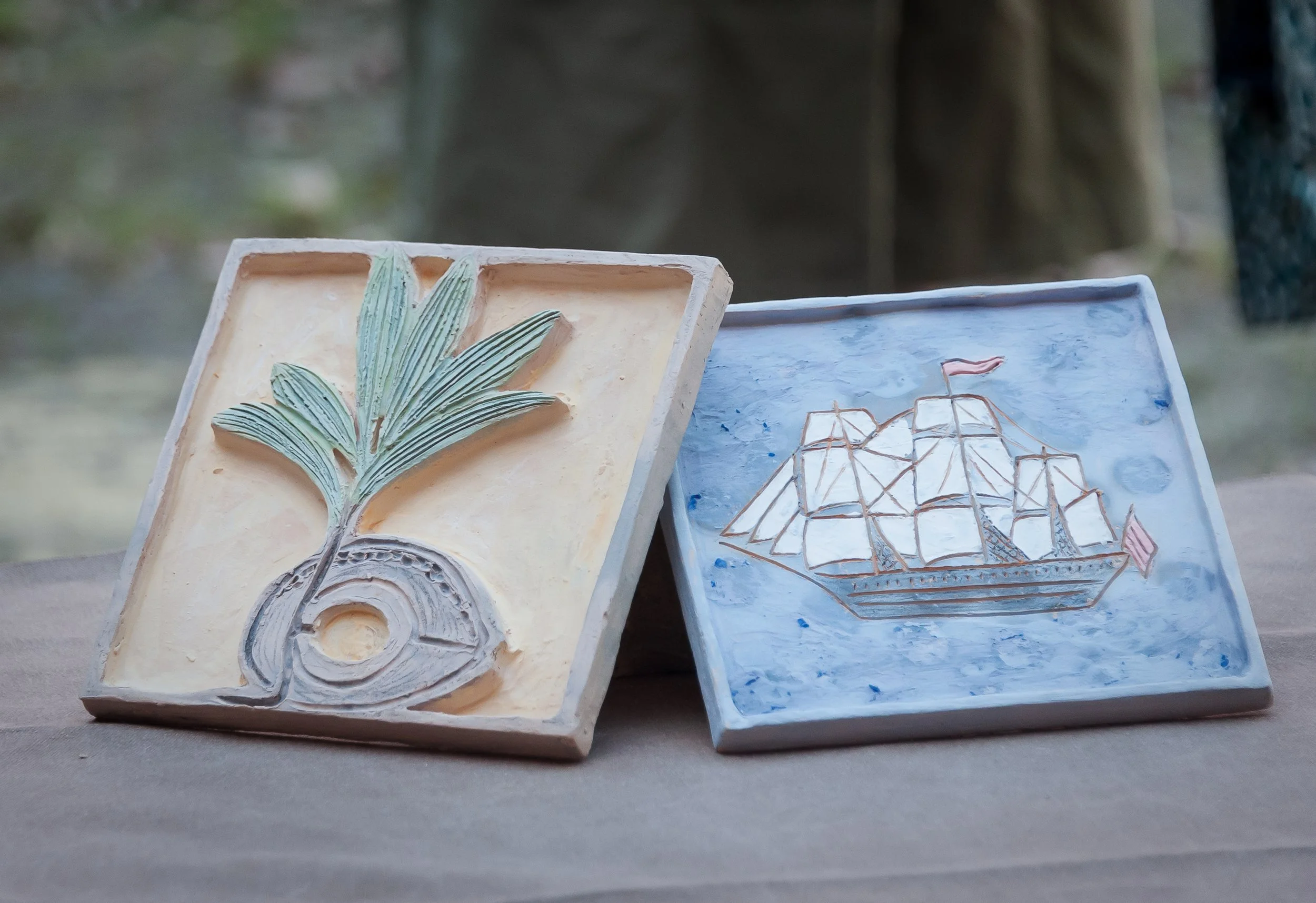
Meet Me Under the Tree researches the relationship between personal, collective memory and colonial history. Melissa grew up in Curaçao. Within her work, she shows how the colonial past remains present in objects, architecture, language, and daily rituals. The project starts with the IJsselsteen, a Dutch brick once used as ballast on colonial ships sailing between the Netherlands and Curaçao. These ships often left the Netherlands without cargo to collect salt and used cheap materials such as the IJsselsteen to stabilize the empty ships. Upon arrival, the stones were traded for enslaved people and were carried across the Atlantic as part of a system of extraction, violence, and displacement. On Curaçao, many bricks were left behind and became part of the local architecture. In the installation, these ballast stones are transformed into ceramic dominoes. By translating the IJsselsteen into dominoes, Melissa brings these histories together. Although dominoes were introduced to the Island during the colonial time, they have transformed into a cultural celebration, deeply rooted in Curaçao. Melissa experiments with the tension between remembering and reclaiming.
The dominoes in this installation highlight forced transport across the Atlantic. Their stacked form recalls how enslaved people were once tightly packed within ships, reduced to cargo within systems of trade and violence. On the reverse side of each ceramic domino brick, Melissa carved human forms that reference the ancestors whose forced displacement and labour shaped the communities that exist today.
Bio
Melissa Cijntje (b. Curaçao, 1997) is a visual artist exploring colonial history, cultural memory, and resilience.
In What Remains, she uses clay to create forms that bear the marks of touch, absence, and fracture, connecting the Caribbean’s past to parallel histories in Southeast Asia.
Working in Hoorn, a former VOC hub, Melissa engages with local archives and interviews to uncover shared wounds left by Dutch imperial trade. Her works invite viewers to approach difficult histories through beauty, creating space for dialogue, reflection, and the possibility of repair.
