
Dagmar Bosma Bleekveld
Residency: 9 April – 11 June 2026
Meet & Greet: April 16, 16.00-17.00
Opening: May 1, 16.00-19.00
Exhibition: May 1 till, June 6.
Finissage: June 6, 13.00-17.00
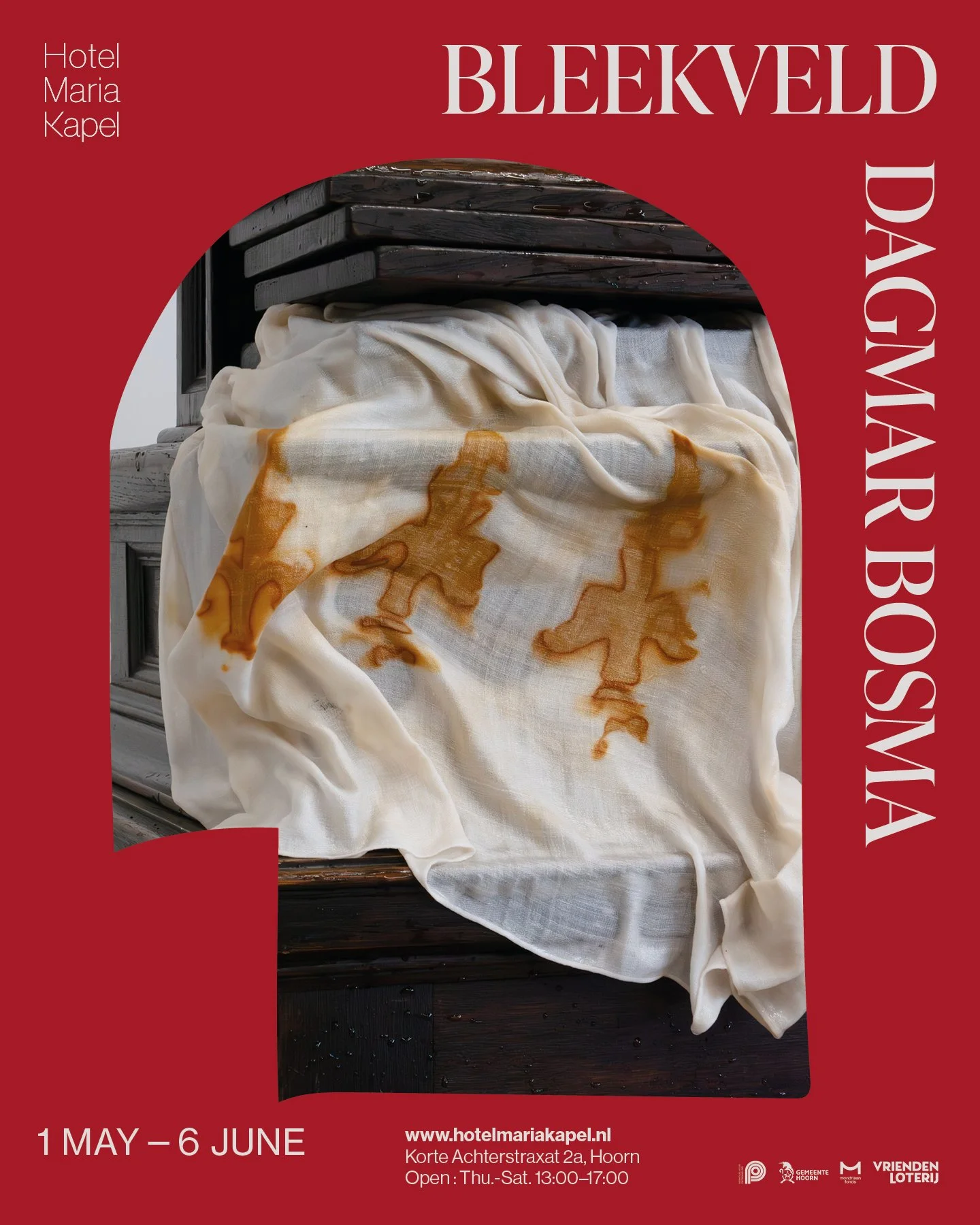
With their installation Bleekveld, Dagmar Bosma (he/they) responds to the multifaceted history of Hotel Maria Kapel. The 16th-century chapel has served multiple functions, including that of a weapons storage facility. The chapel's courtyard was also used as a ‘bleaching field’, where household linen was laid out in the sun to bleach it.
With the project Bleekveld, artist Dagmar Bosma has developed an installation that engages with the historical context of the Maria Kapel and the adjacent courtyard. Over the centuries, this site has had various functions—the chapel was formerly used as an artillery depot and the garden as a bleachfield for linen. Dagmar takes this material history as the starting point for his research into the role of linen in the 17th-century household and the colonial trade of the Dutch Republic.
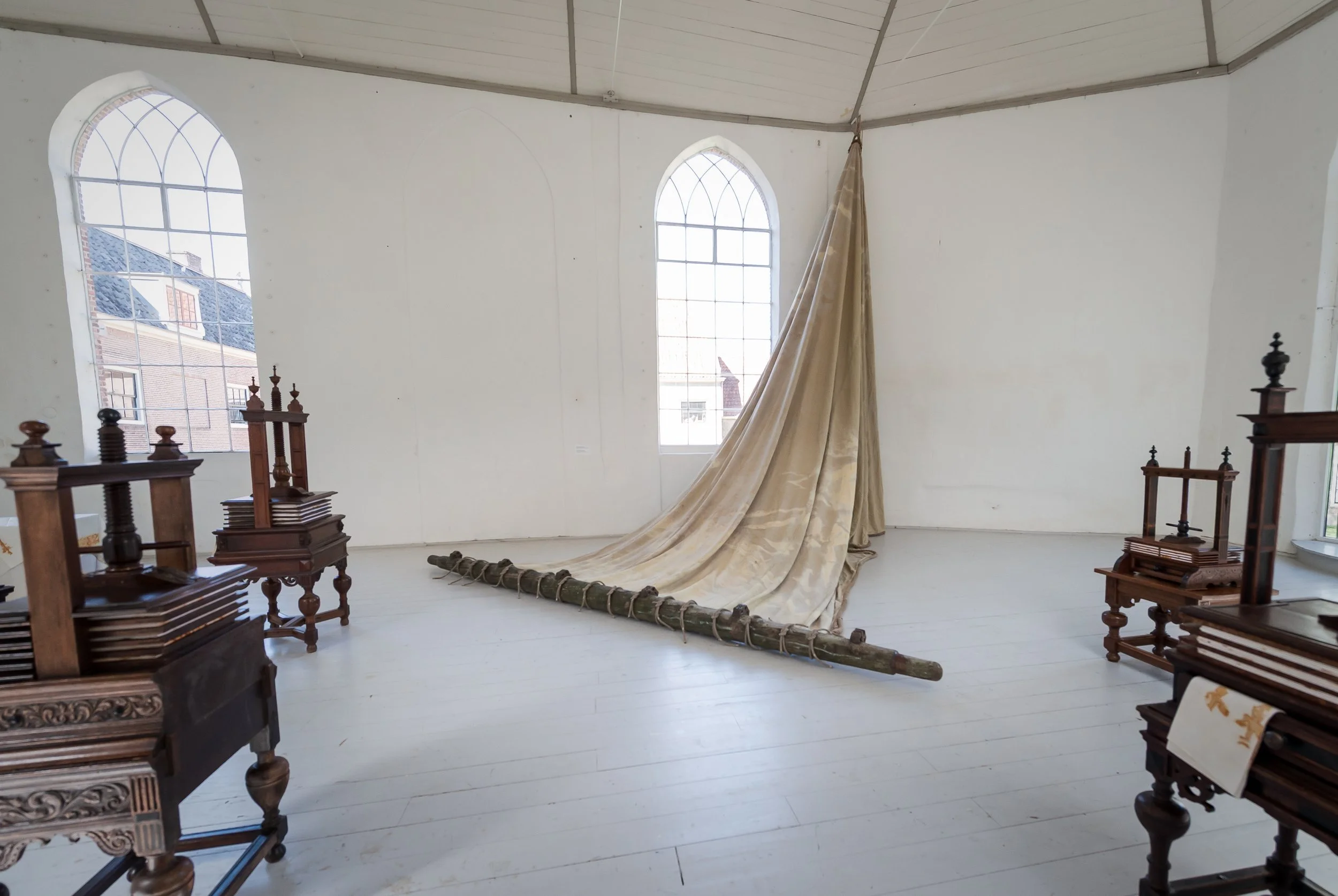
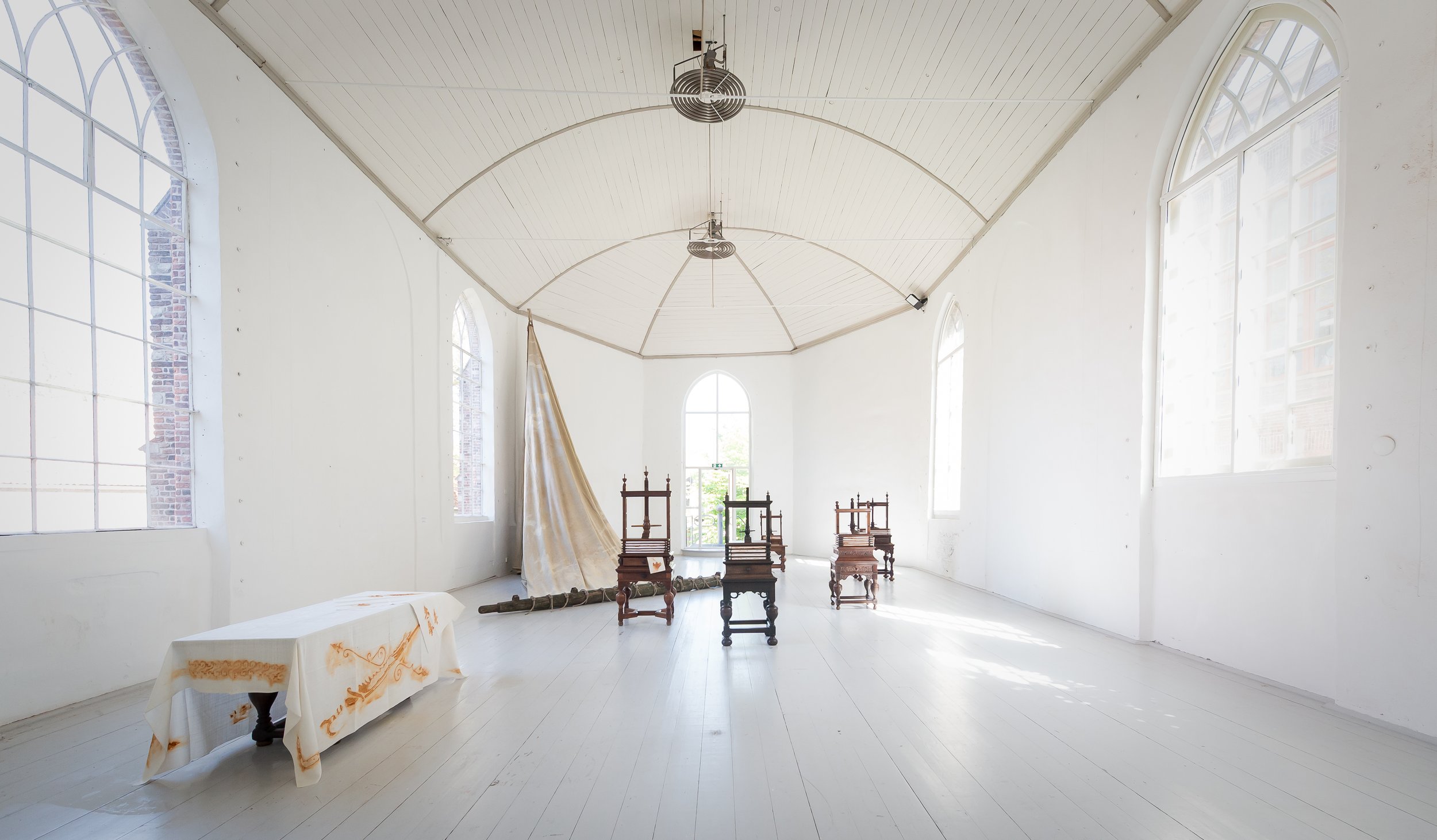
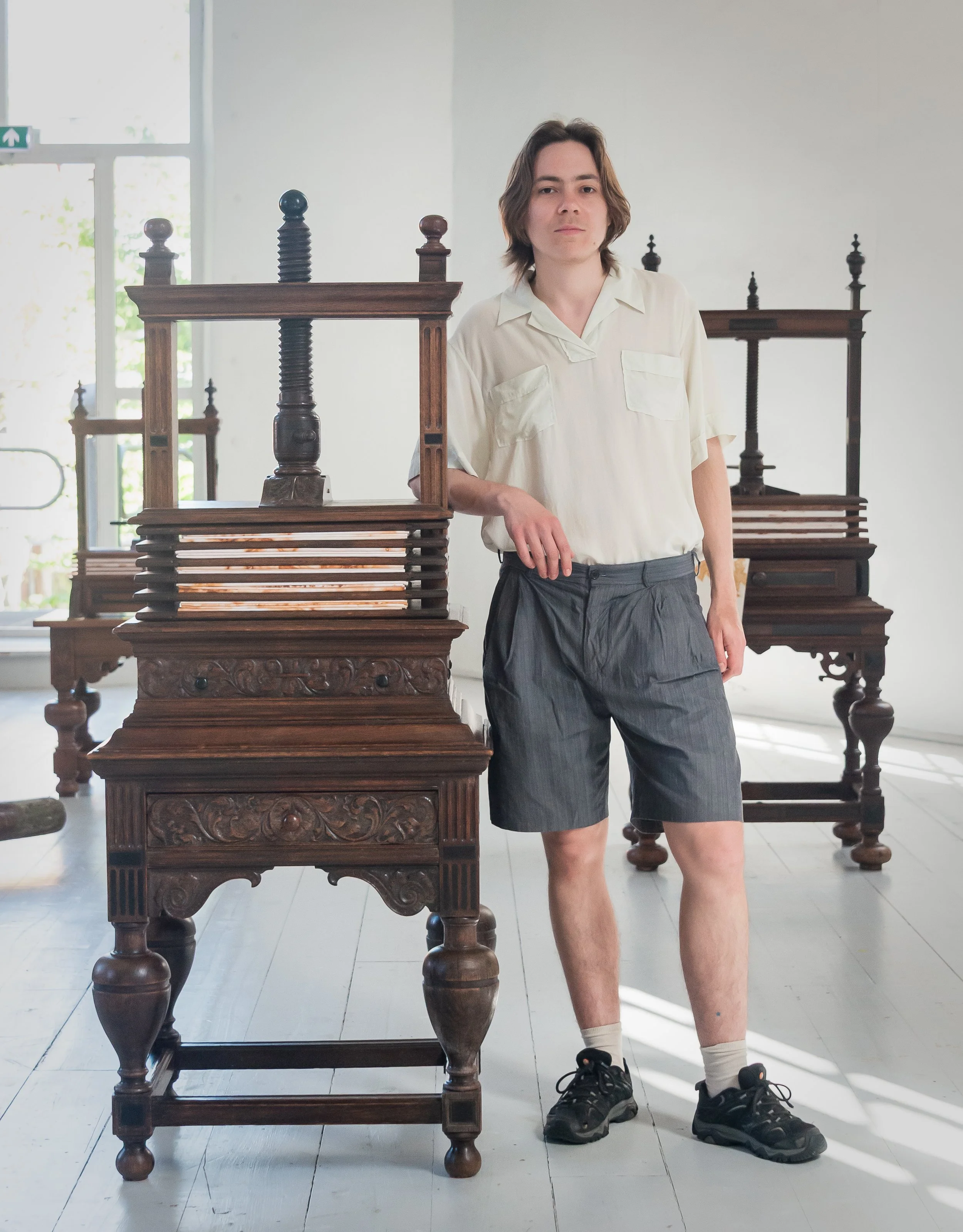
A group of 17th-century linen presses form the center of the installation, objects that served both practical and symbolical purposes. The elaborately decorated linen press occupied a prominent place in the reception room of the house. Finely woven linen was more than just a household item; it was a status symbol that expressed the wealth of the bourgeoisie. Its value was determined not only by the costly material itself, but also by the intensive maintenance it required.
To remove stains from the linen, wet laundry was laid out on bleachfields, where sunlight and oxygen did their work. The linen press was used to make sharp folds in table linen, signalling cleanliness and rectitude. Starkly white linens reflected the order, discipline, and morality of the household in which it circulated. These everyday actions; washing, bleaching, folding, and pressing are approached by Dagmar as forms of reproductive labor that convey a rigid worldview. It is a mentality that is tightly linked to Dutch colonial rule, which accumulated wealth through oppression and enabled the expansion of domestic possessions.
Within the installation, Dagmar points to the continuous construction of whiteness as an ideal of superiority. He corrupts this cycle by dyeing linen with rust, an intervention that irreversibly alters the material and symbolises the violent history of colonialism. The installation includes rust-dyed 17th-century napkins and a tablecloth made of linen damask. This valuable textile with woven patterns—which are rendered visible only by specific lighting—was also known as ‘white gold.’ Linen damask was an important Dutch export, which was traded on the West African coast in exchange for enslaved people.
Linen was also essential in the national production of ship sails; the engines of overseas expansion and the Transatlantic slave trade, that stretched out loomingly on the horizon. Suspended from the boat-shaped ceiling of the chapel is a linen sail belonging to the replica of the Batavia, a mirror return ship of the Dutch East India Company rebuilt between 1985 and 1995 as a tribute. Dagmar brings together charged objects to emphasize the traces of colonial violence and ideology embedded within them. In Bleekveld, history is investigated through its artifacts, and material culture is inextricably interwoven with ways of thinking, past and present.
This exhibition was made possible through loans courtesy of Museum Batavialand, Yvonne Tomberg, and Alexander Blom, and the expertise of art historian Sanny de Zoete and sailmaker Klaas van Haeringen.

This note from a 1671 trade record on the exchange of goods for enslaved people reads: “60 ells of Haarlem damask for one slave.”
Source: Stadsarchief Amsterdam.
© Bart Treuren
Bio
Dagmar Bosma (he/they) is an artist, writer, and gleaner living in Amsterdam. In his installations and sculptural work, he employs rust-dyeing techniques to trans*fer place-specific traces.
Past presentations include the solo exhibitions Male Ingredients at Digestivo in Madrid and Tough and Tender at Manifold Books in Amsterdam, and group exhibitions at W139 (Amsterdam), A Tale of a Tub (Rotterdam), Marres (Maastricht), Flippy’s Queer Bar (Melbourne), Rosa Kwir (Balzan), and Dracul.la (Barcelona).
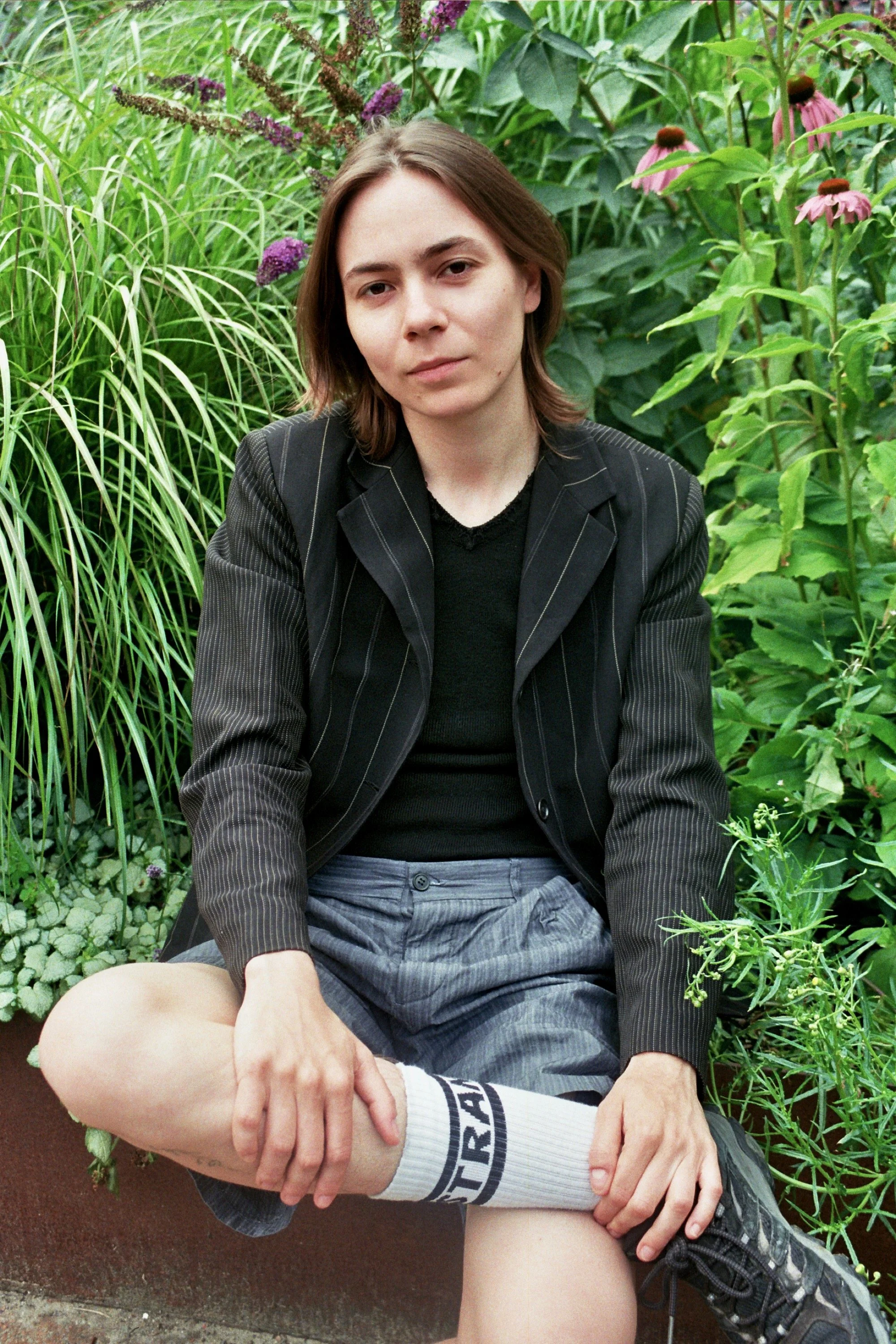
By Stine Sampers
Dit project is mede mogelijk gemaakt door: Mondriaan Fonds, Gemeente Hoorn, VriendenLoterij Fonds, Werktuig PPO & Huis Bonck.