
Leonie Brandner: Moonhorn
Residency: 30 July – 1 October 2026
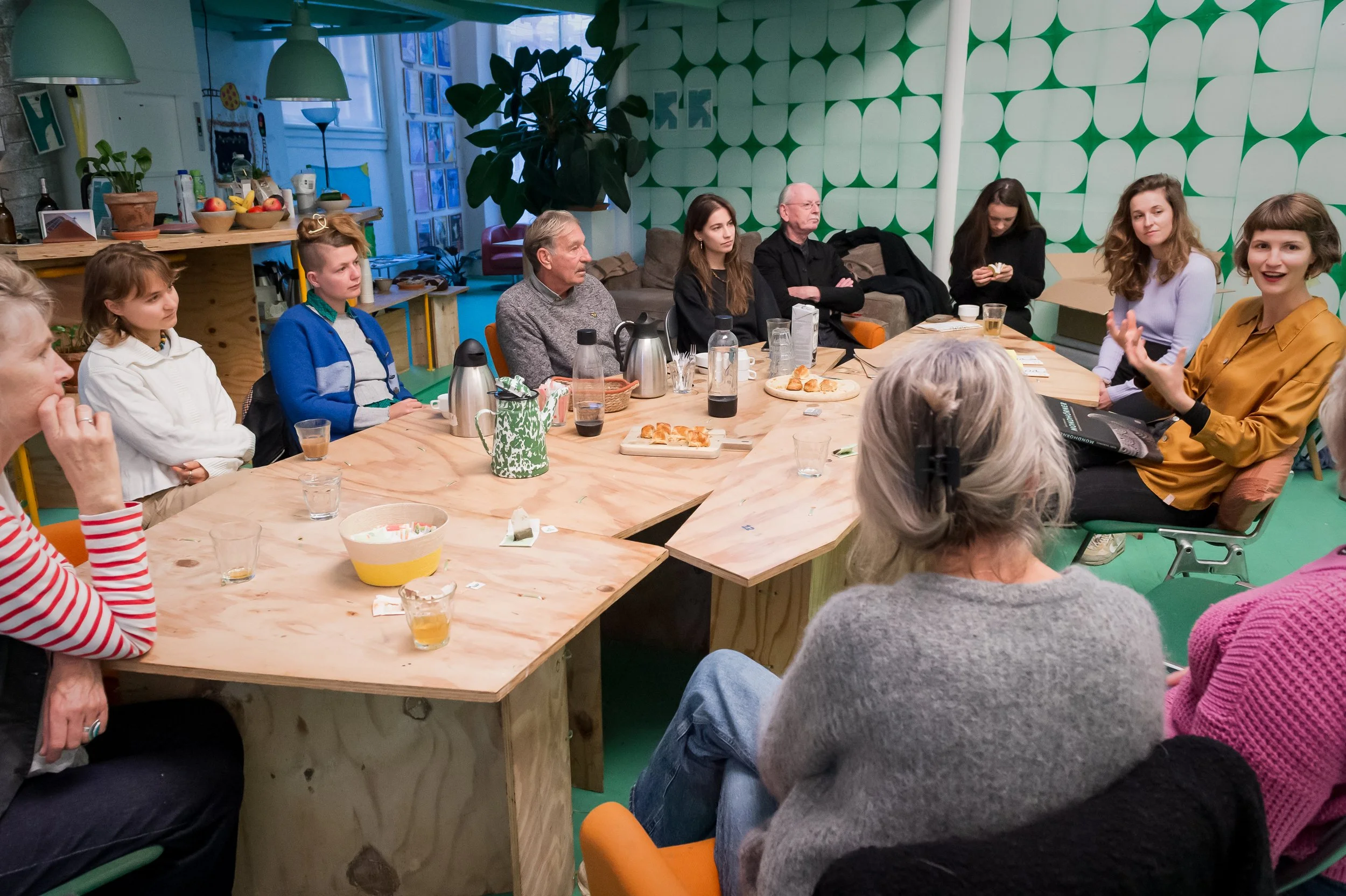
Meet & Greet: 23 October
Moon bouncing: 6 November
Singing workshop: 8 November
Opening: 21 November
Exhibition:
21 November–13 December 2025
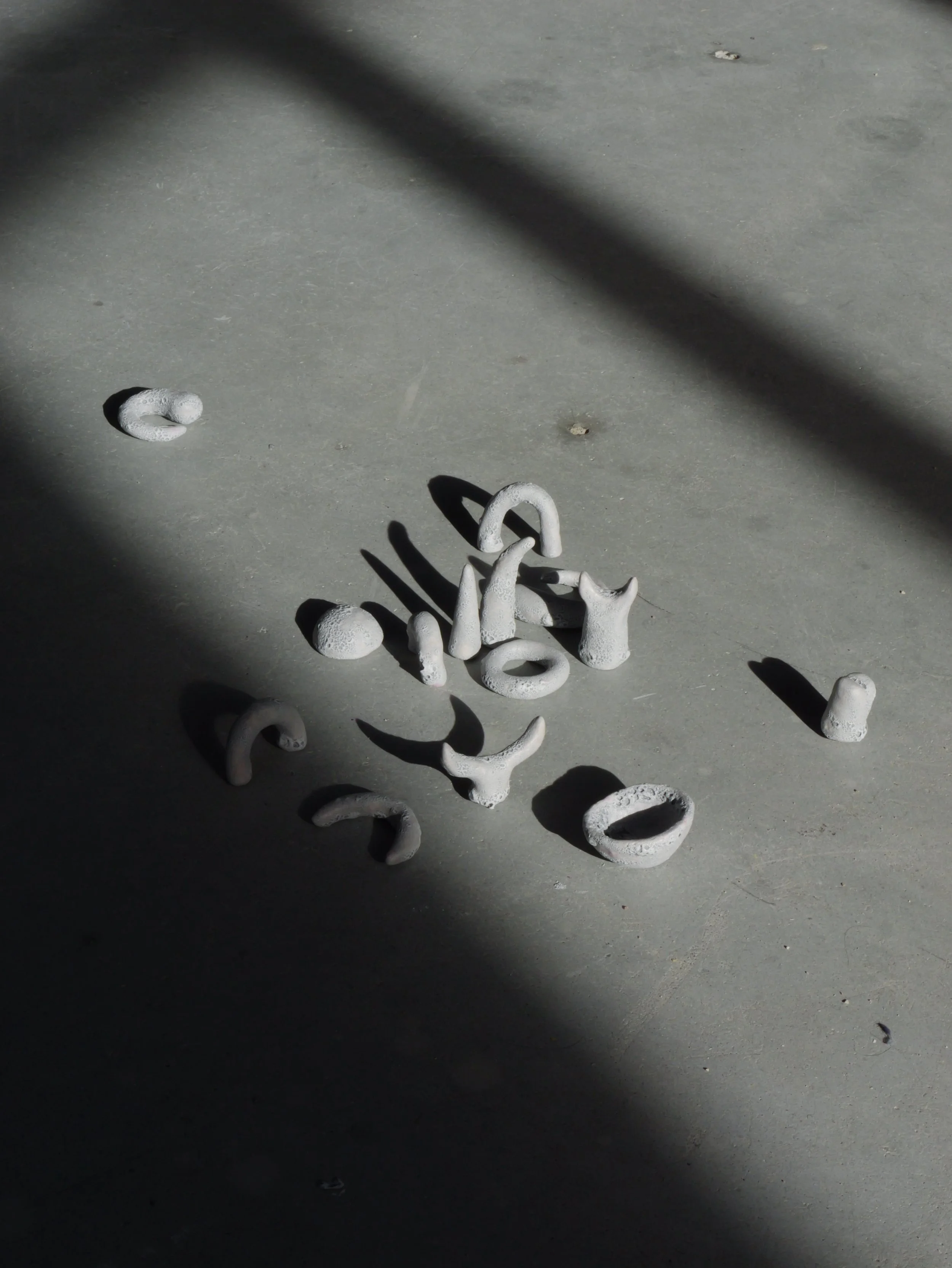
by Leonie Brandner
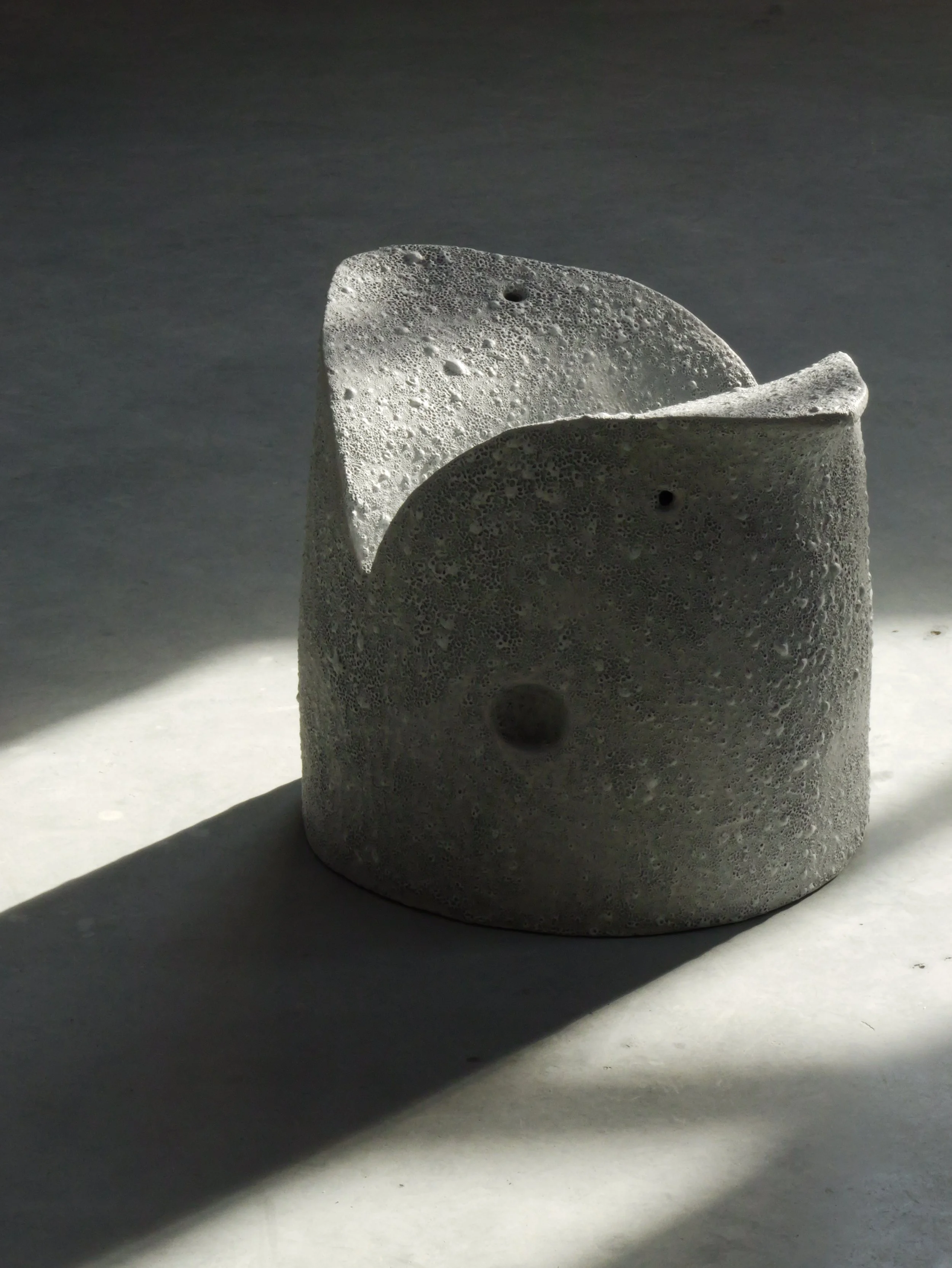
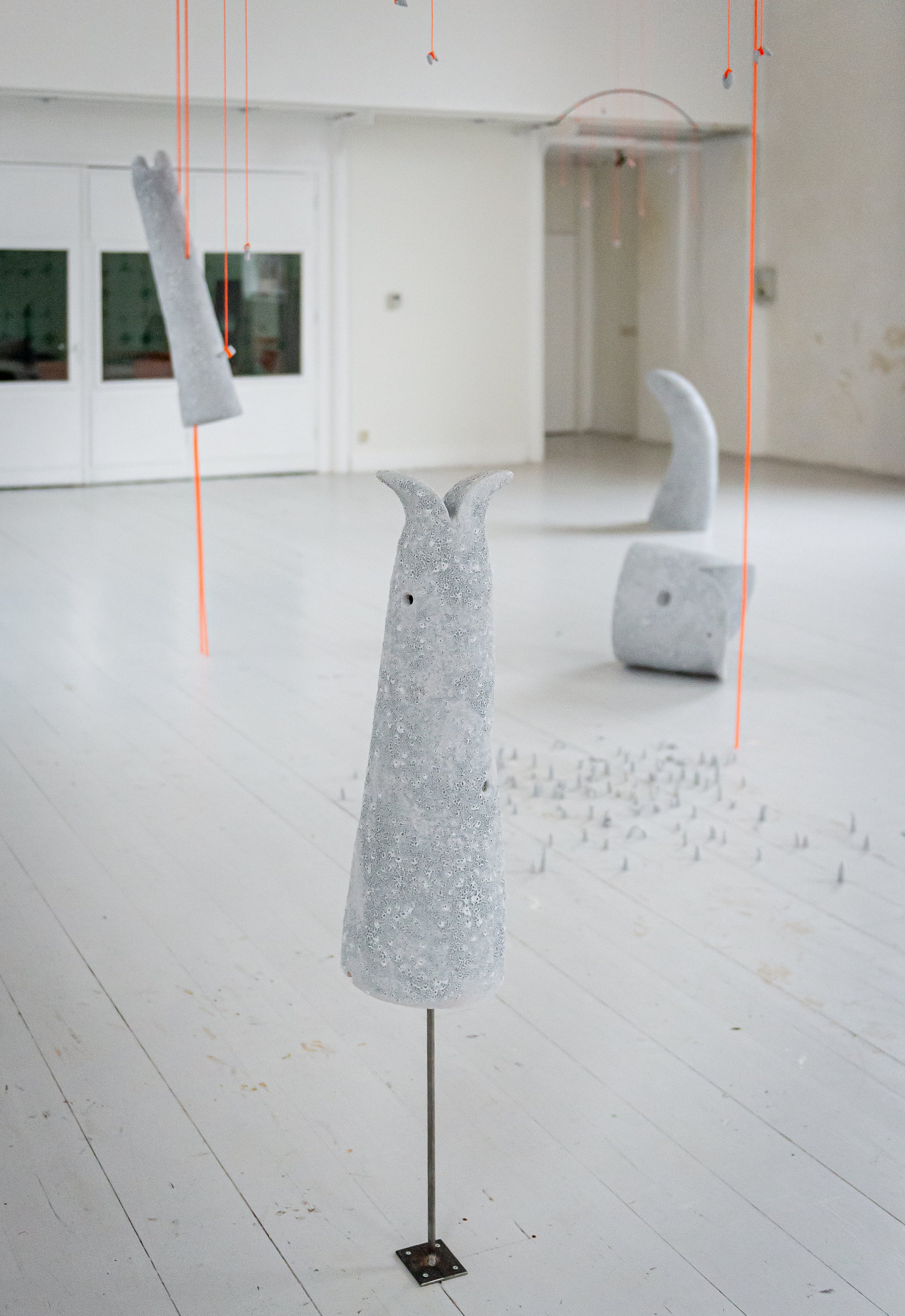
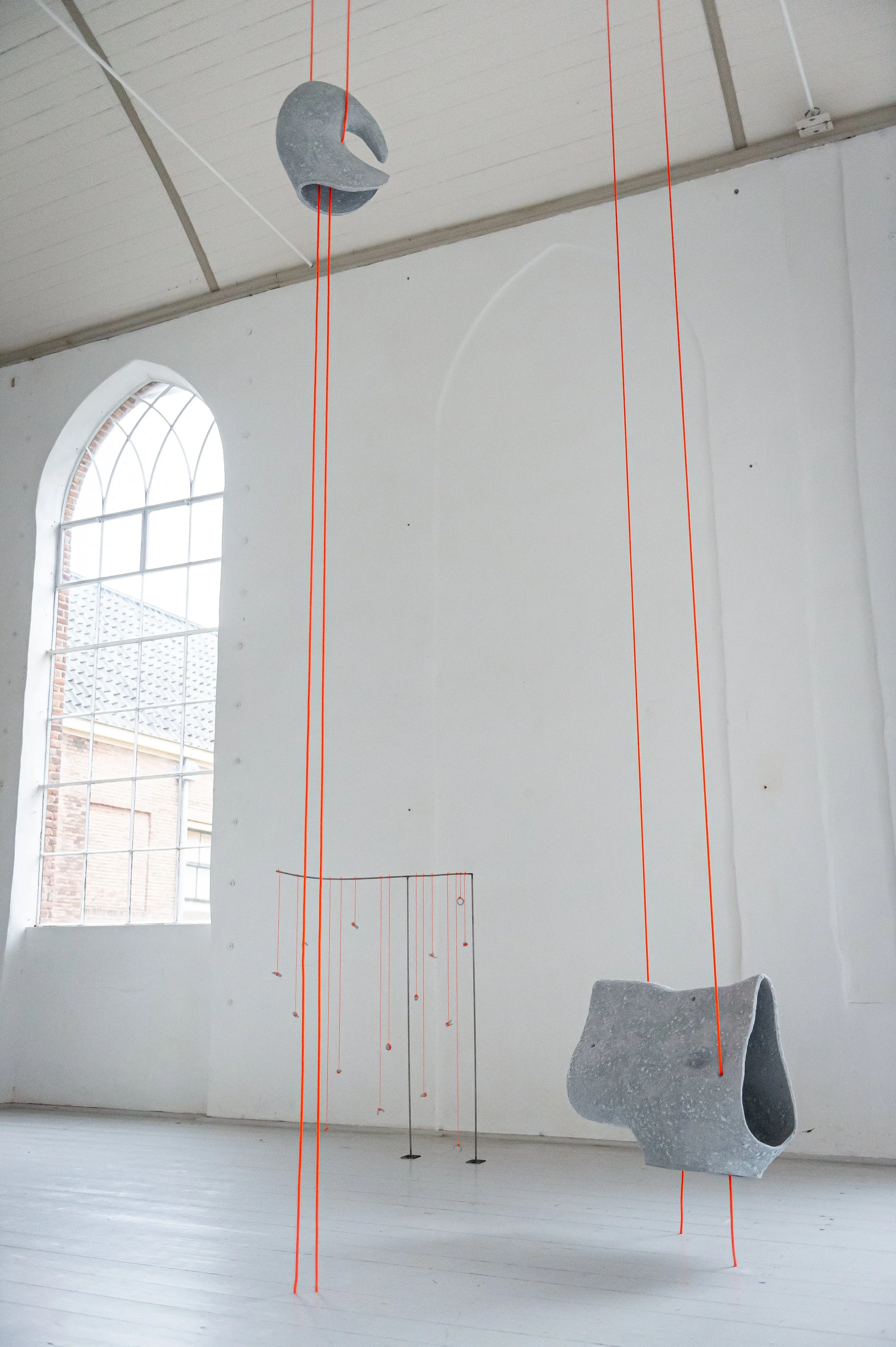
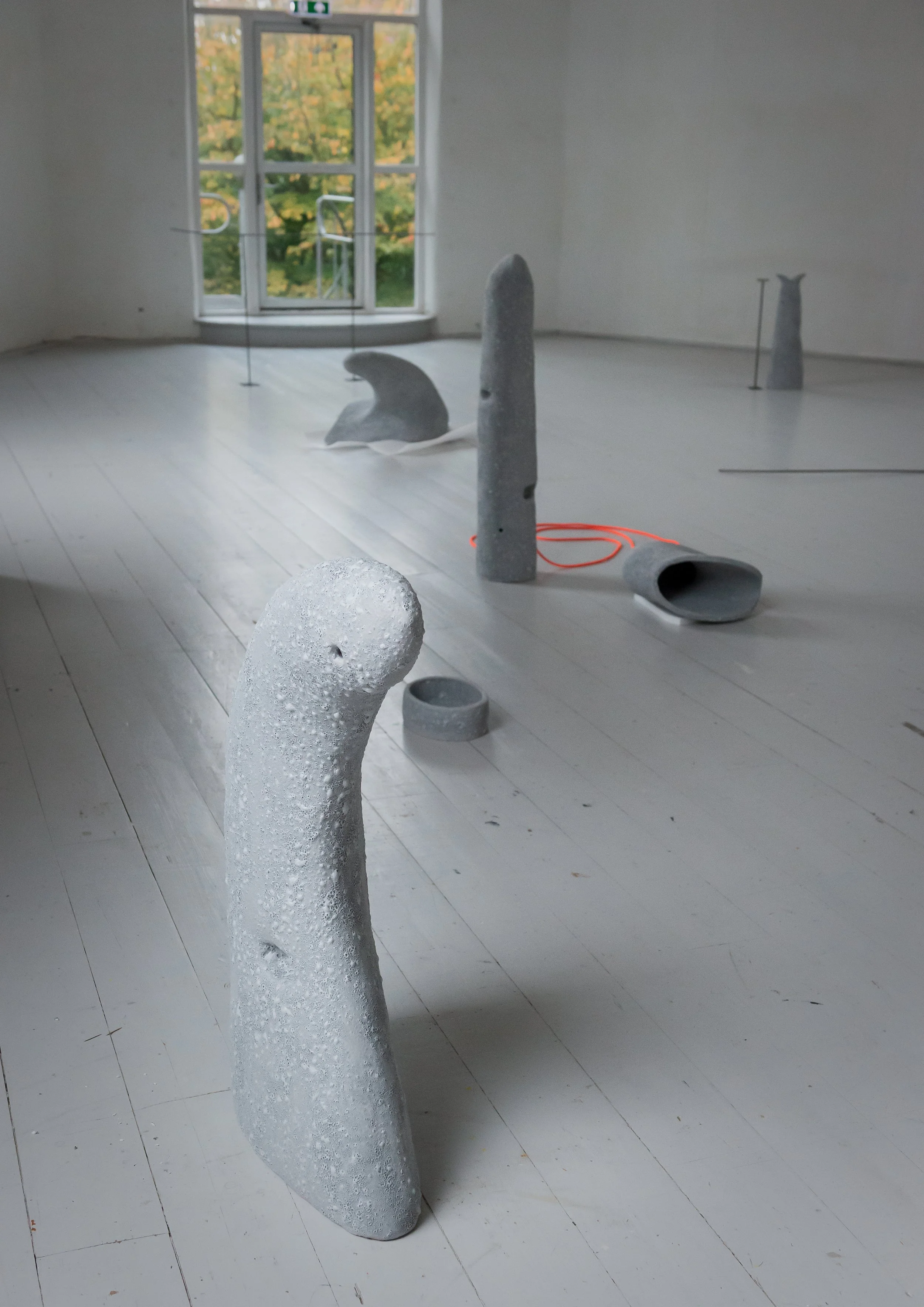
During her residency, Leonie Brandner will research "moonhorns": ceramic objects shaped like crescent moons or horns dating back to the Bronze Age, about which further knowledge is entirely absent.
A neck rest? A religious artefact? An instrument, perhaps?
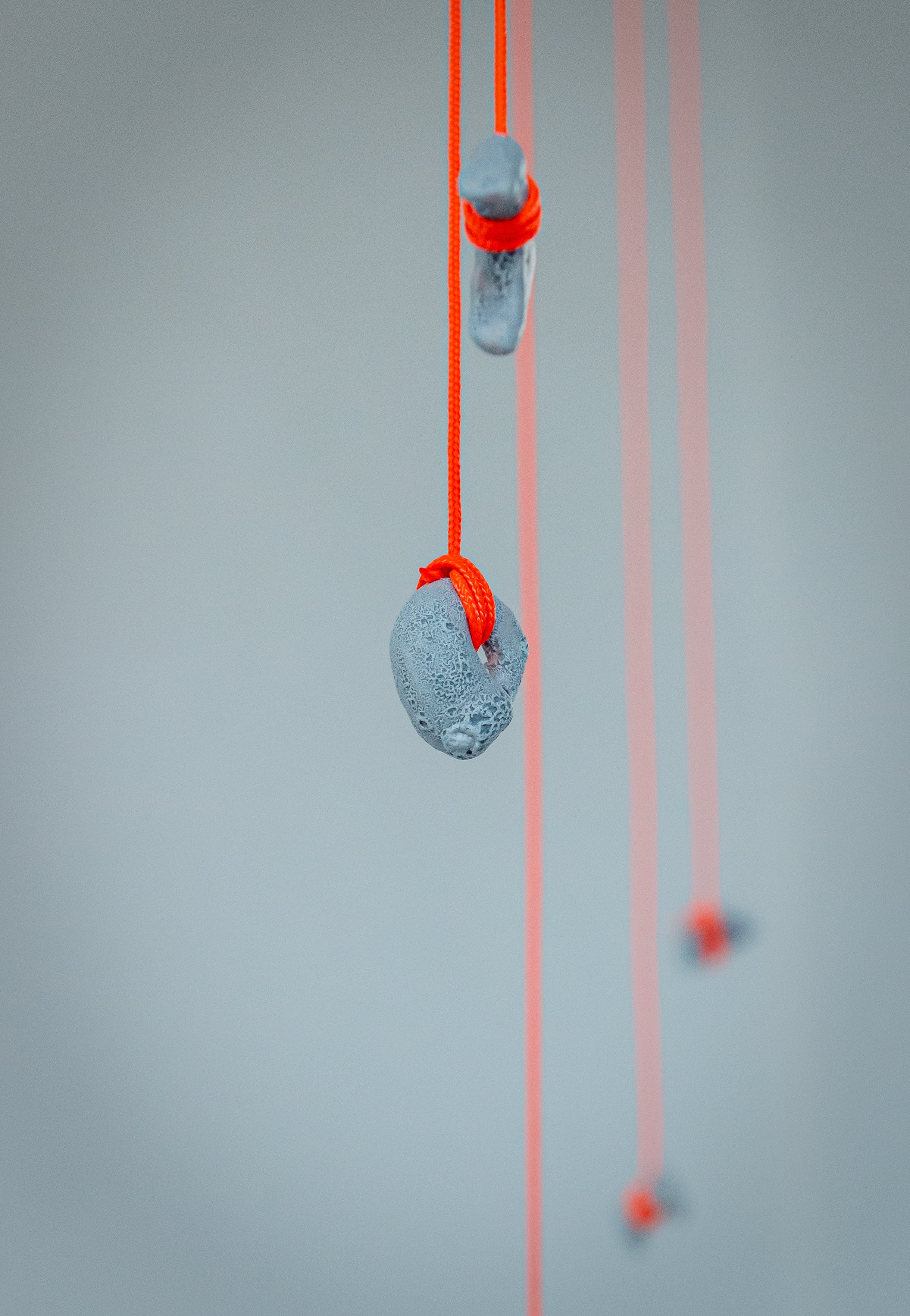
Moonhorns are a mystery in archaeology. These undefinable objects, dating back around 1300–600 BCE, have been found throughout the North Alpine region. They are made of fired clay and range in size from five to eighty-four centimetres. More than seven hundred have been found, not in graves, but mostly among domestic remains - too many to discard their existence as a mere coincidence. Moonhorns are often found not as a whole, but broken into many pieces. Is this the result of time, or does a deliberate ritual lie behind their breaking? Somehow, we have lost the ability to read these objects, leaving them hanging mid-air, restless, unresolved, pending. They leave us wondering what might be, could be, pondering the possibilities embraced by uncertainty.
The name moonhorn (originally in German Mondhorn) refers to two obvious associations: “moon” for its crescent lunar shape, and “horn” for its cowhorn-like silhouette.
“All that we have are clay objects with a name pointing simultaneously to bodies residing on this earth and to a body in outer space.” – Leonie Brandner
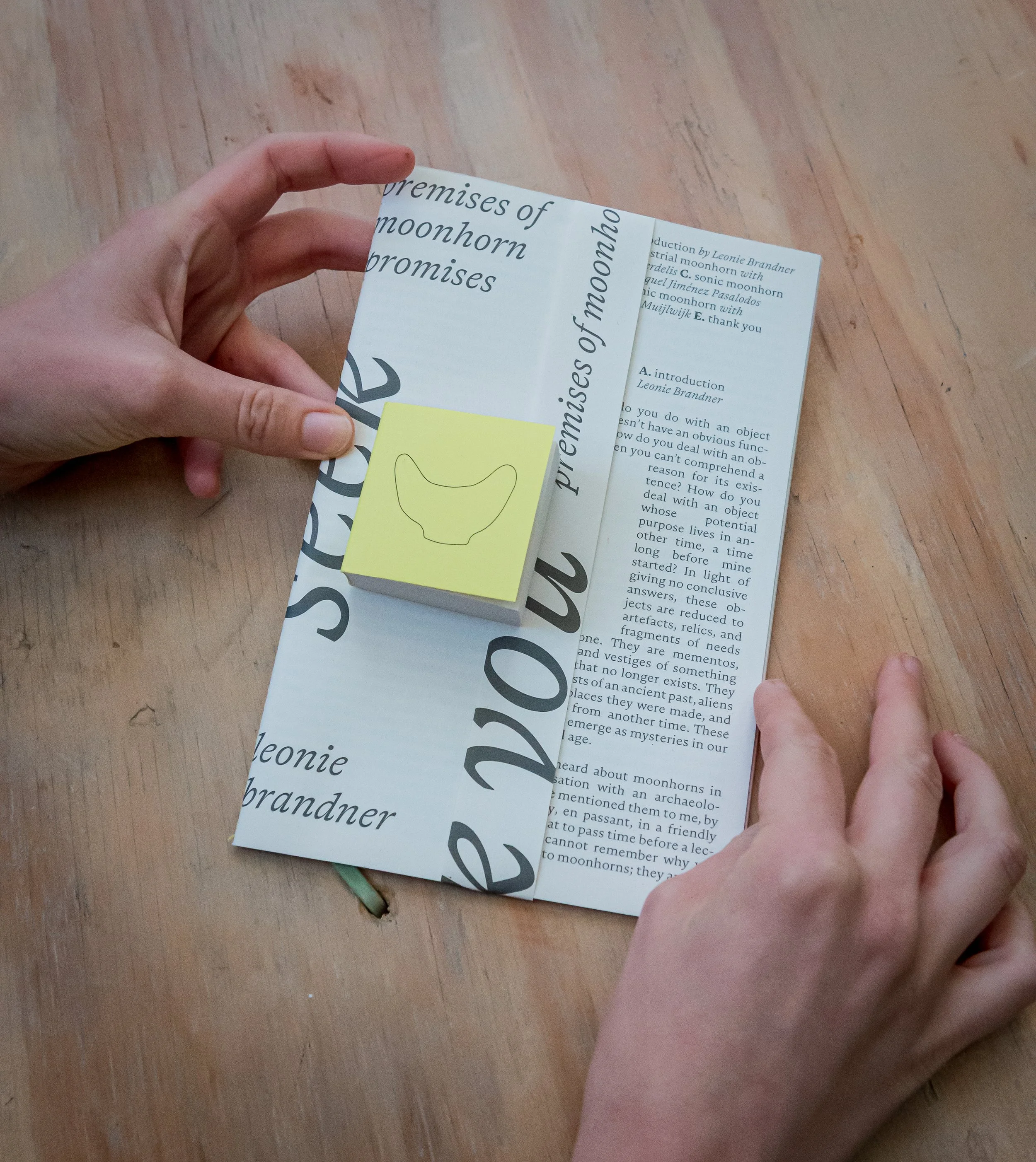
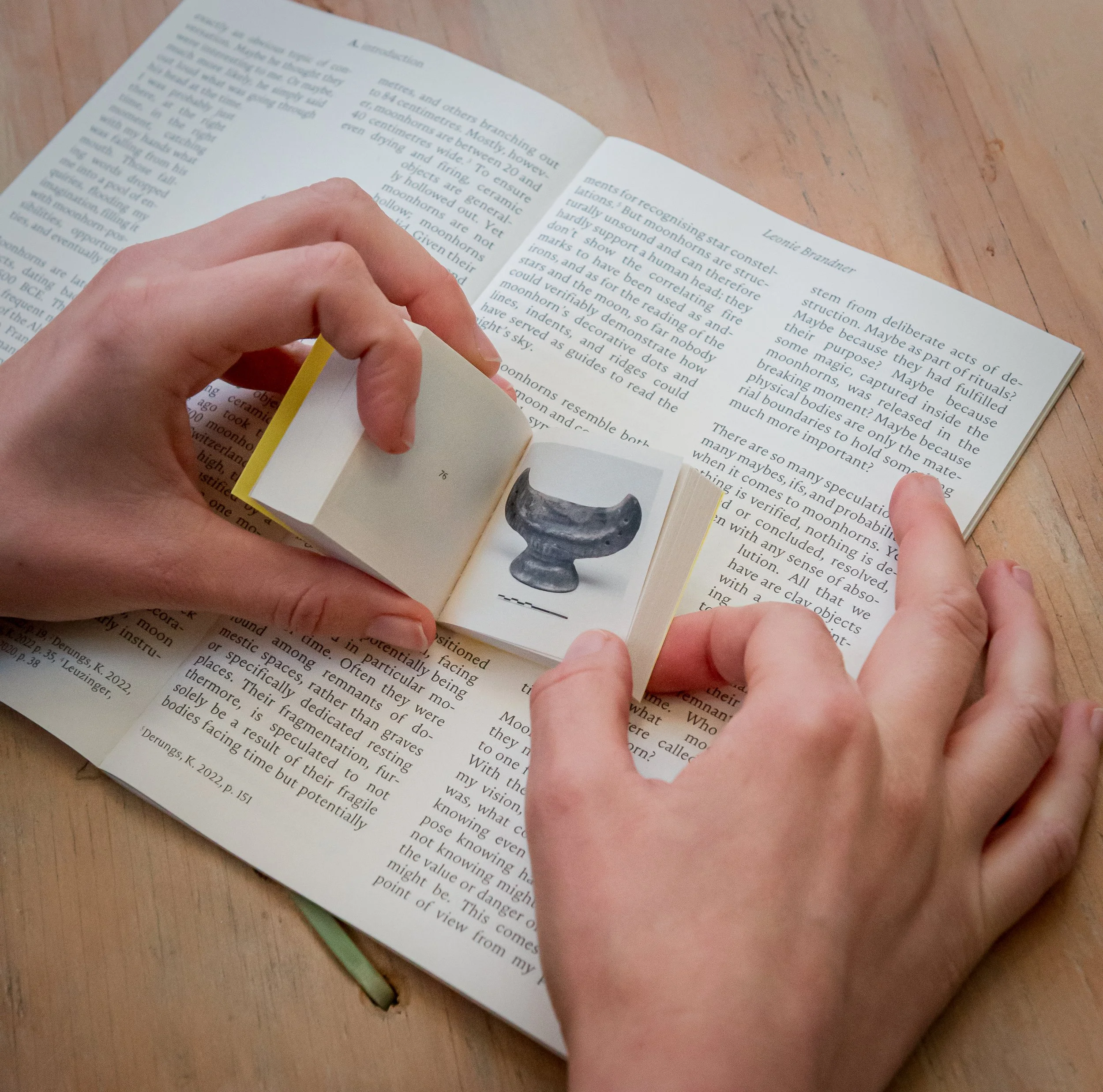
Artist Leonie Brandner is not trying to find answers. Instead, she is trying to hold the not-knowing in her hands. She wants to use moonhorns as tools to look at the possibilities not knowing opens up. How do we deal with an object that doesn’t seem to hold any discernible reason to exist? What is the value of knowing versus not knowing? With her project, Leonie is giving a voice to the shifting currents of uncertainty. She connects the moonhorns with the idea of Seek You, a term borrowed from the world of Earth-Moon-Earth communication. When moonbouncers attempt to connect with someone by sending radio signals via the moon back to earth, they use the Morse code letters CQ, reading out loud “Seek You.” For Leonie, this embodies the universal longing for connection, the search for meaning, purpose, past, future, and everything in between: “You is all there ever is to seek.”. For this residency, she also published two artist books: Seek and You
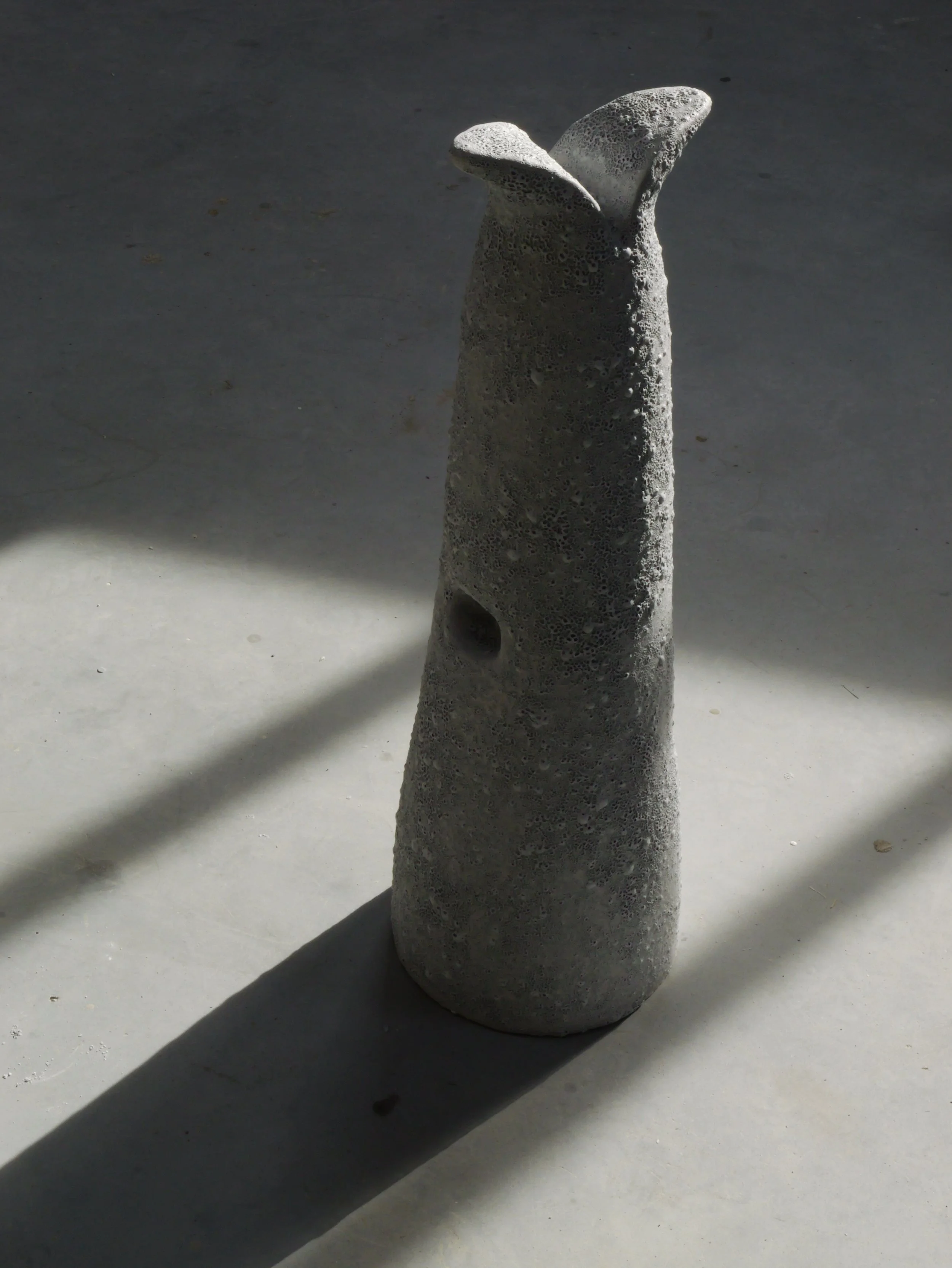
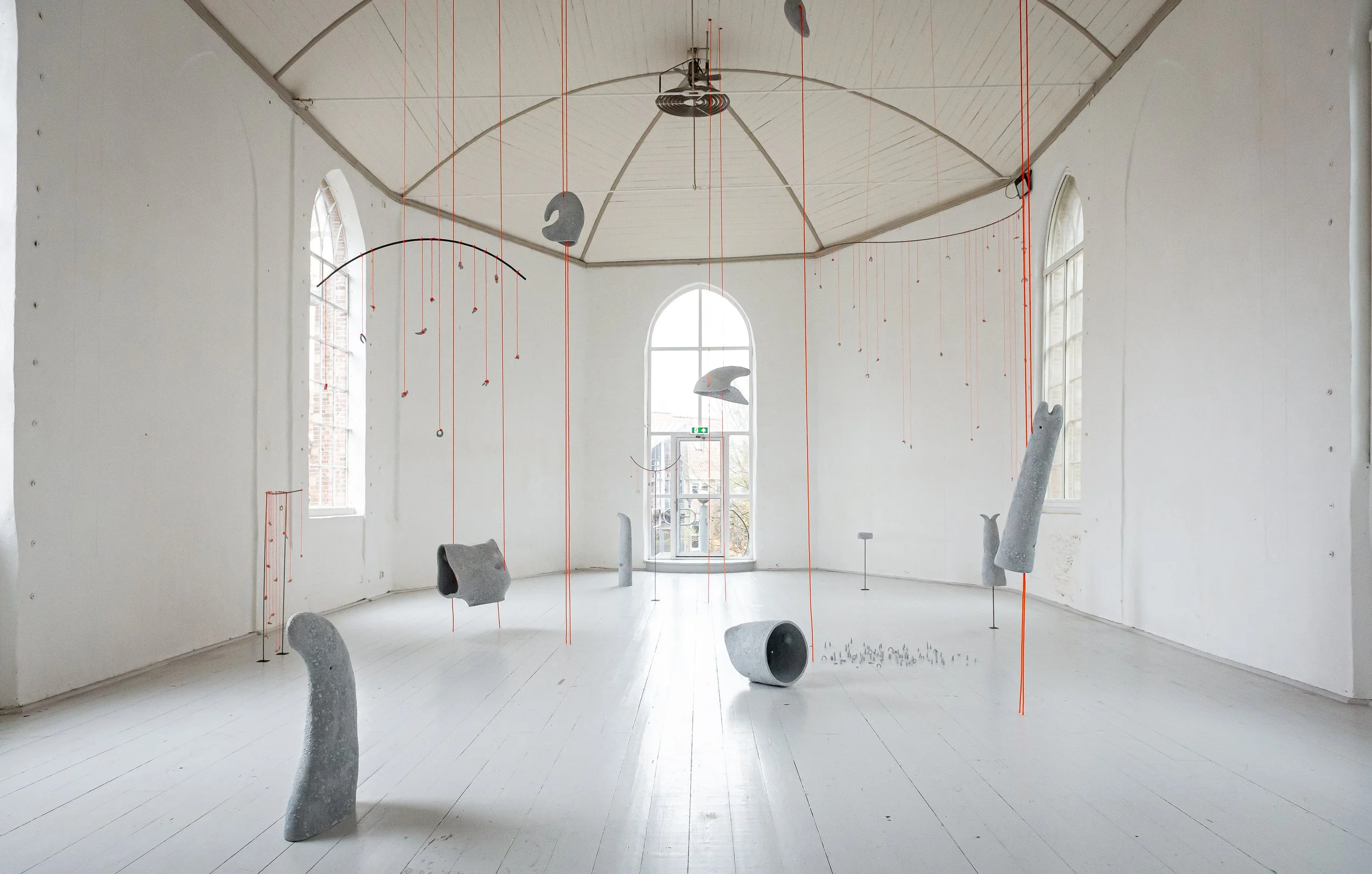
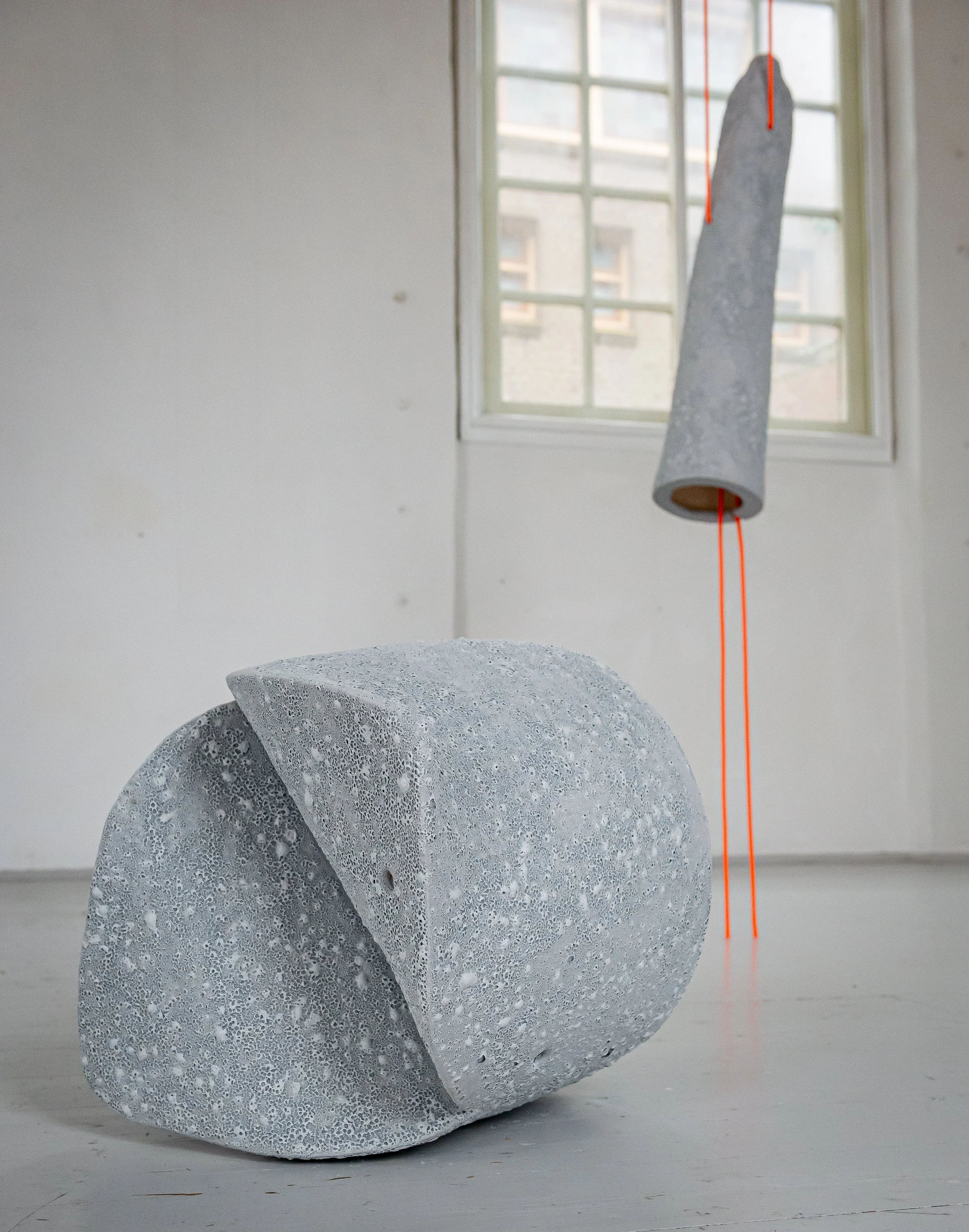
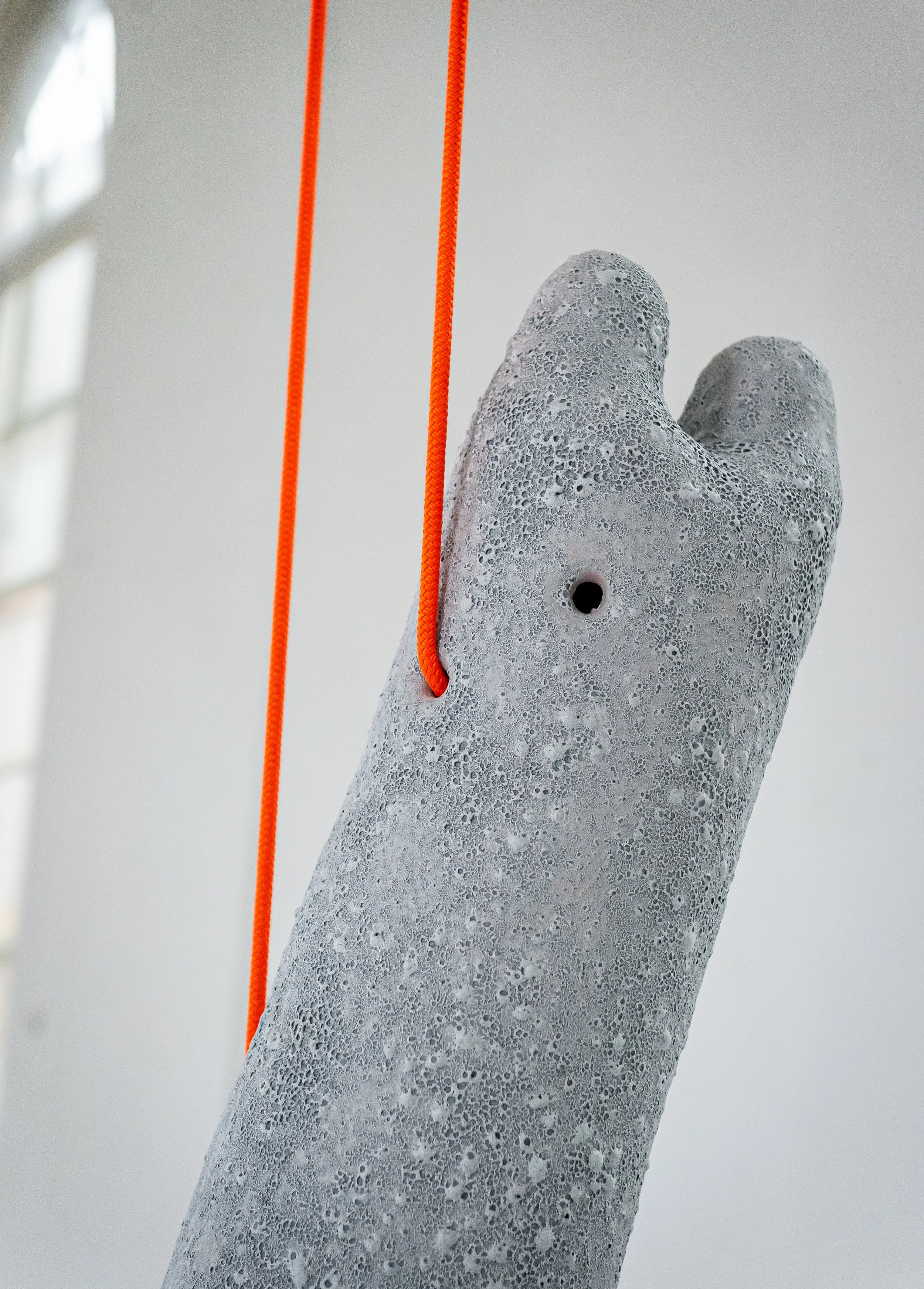
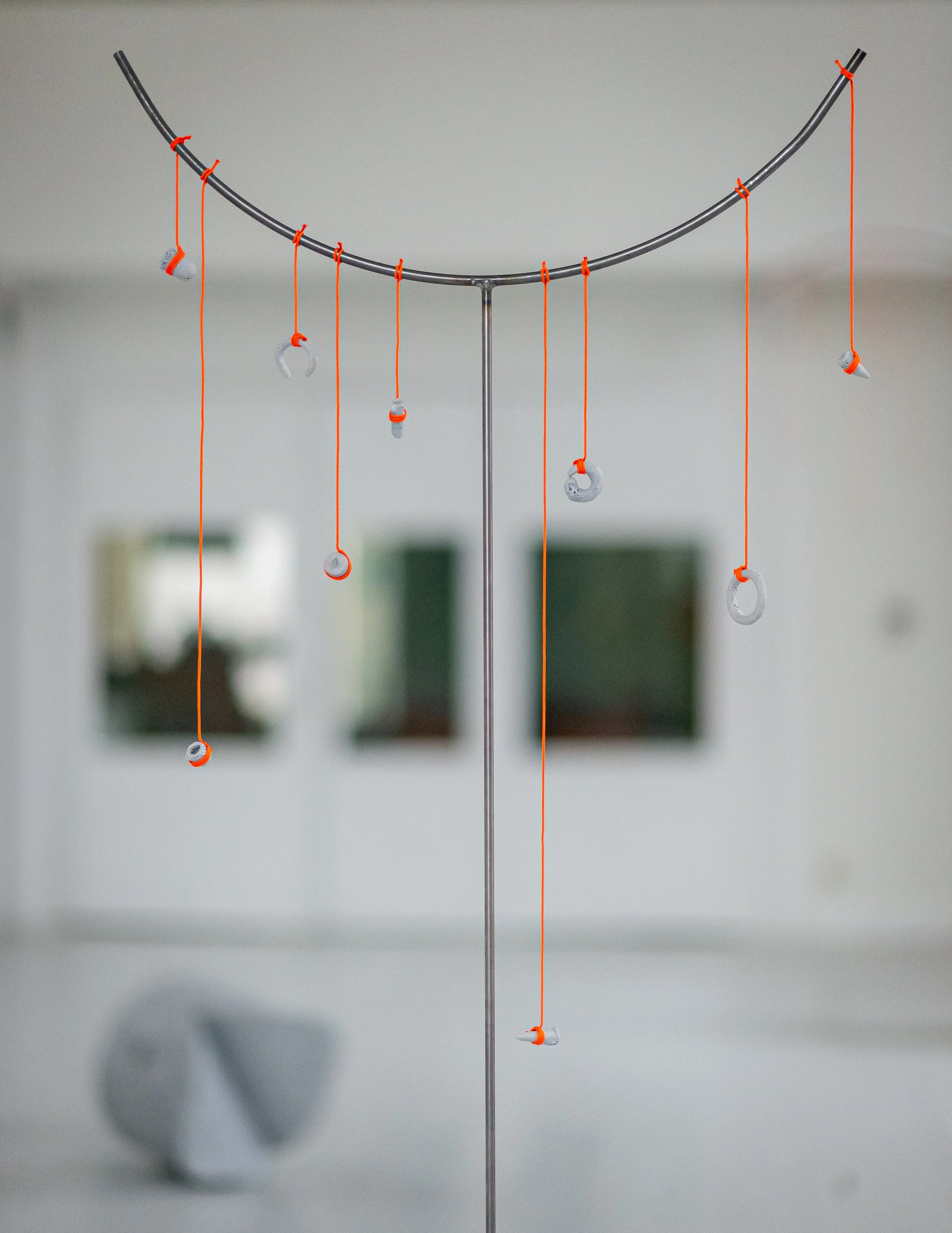
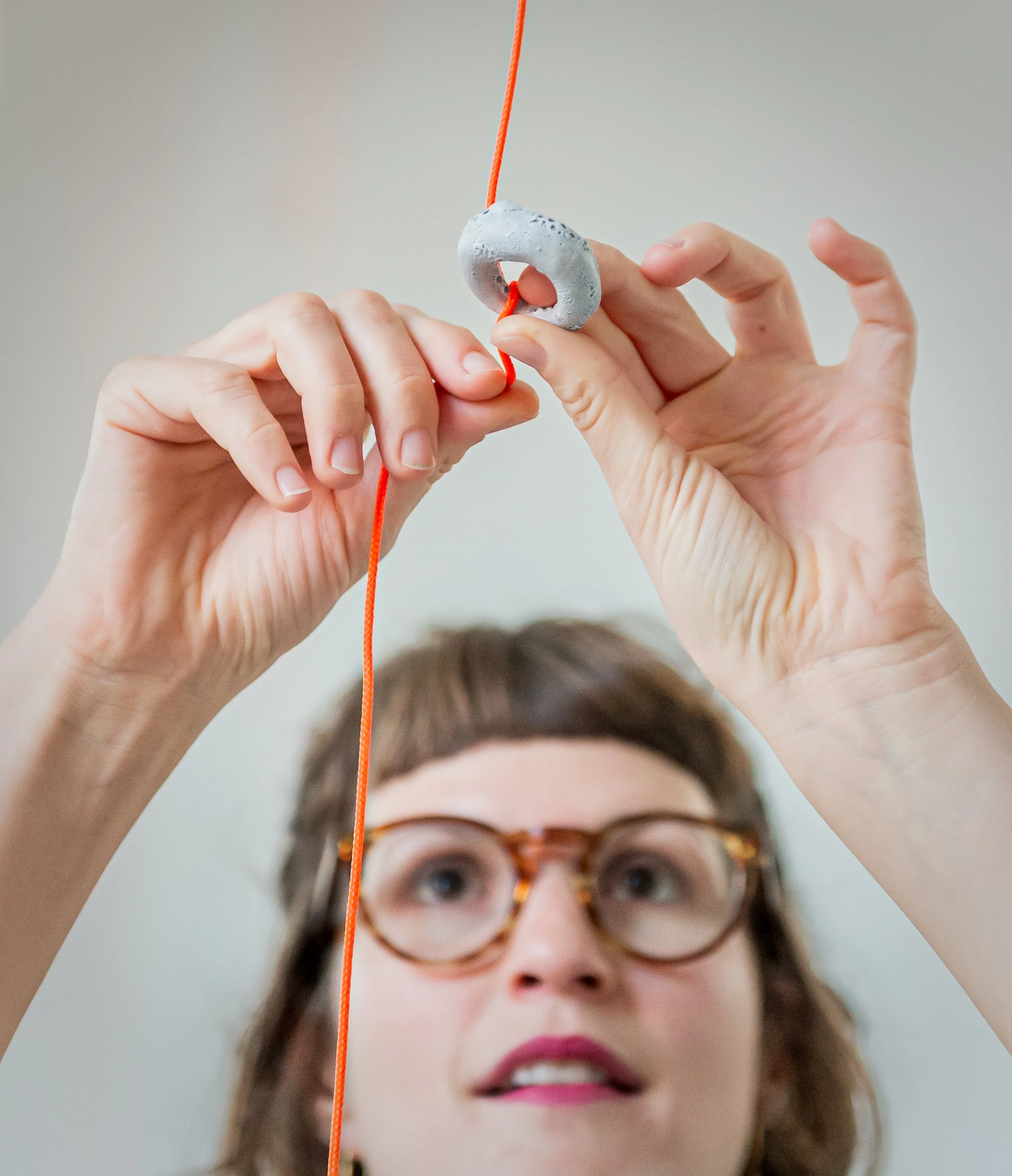
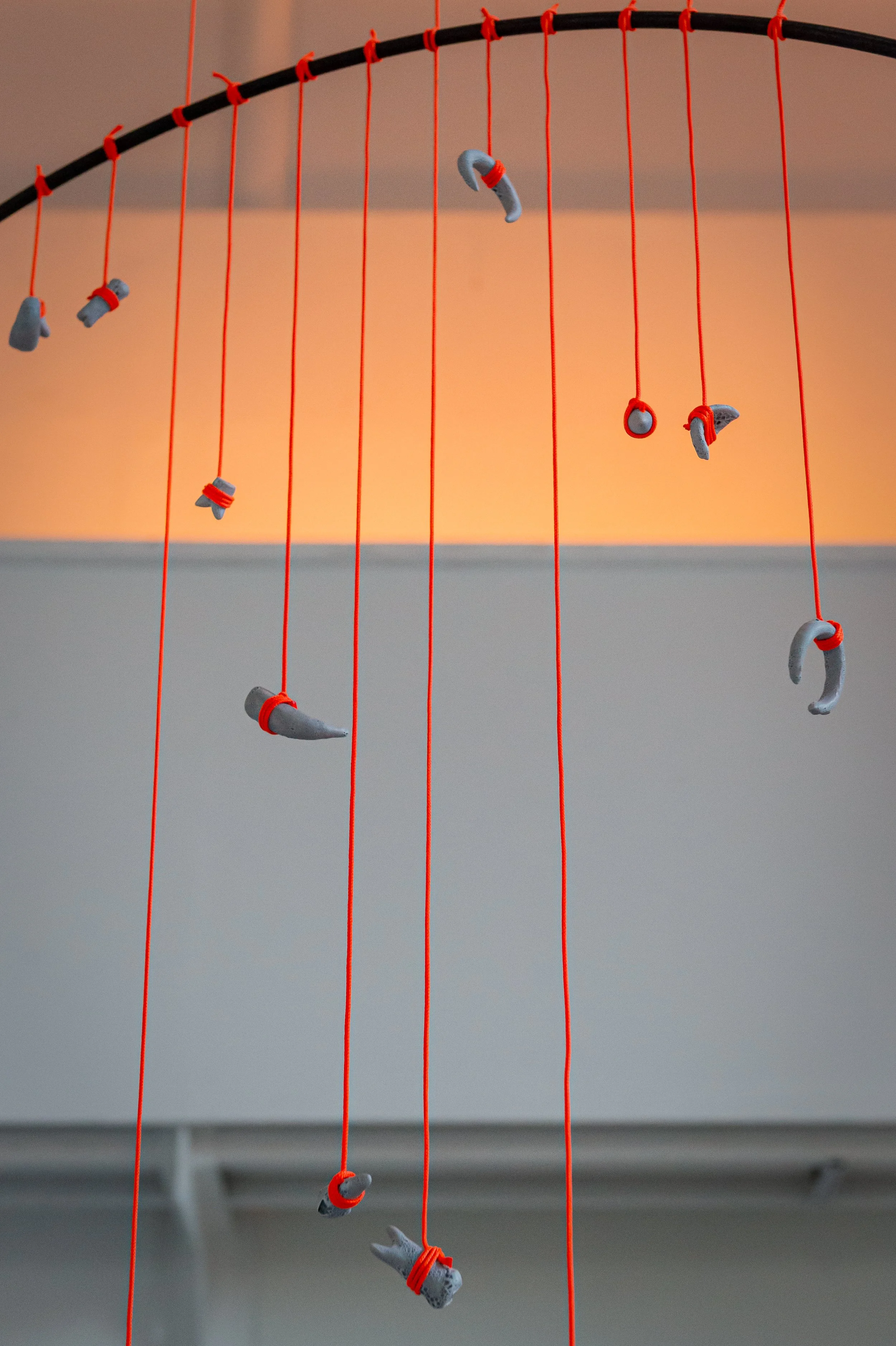
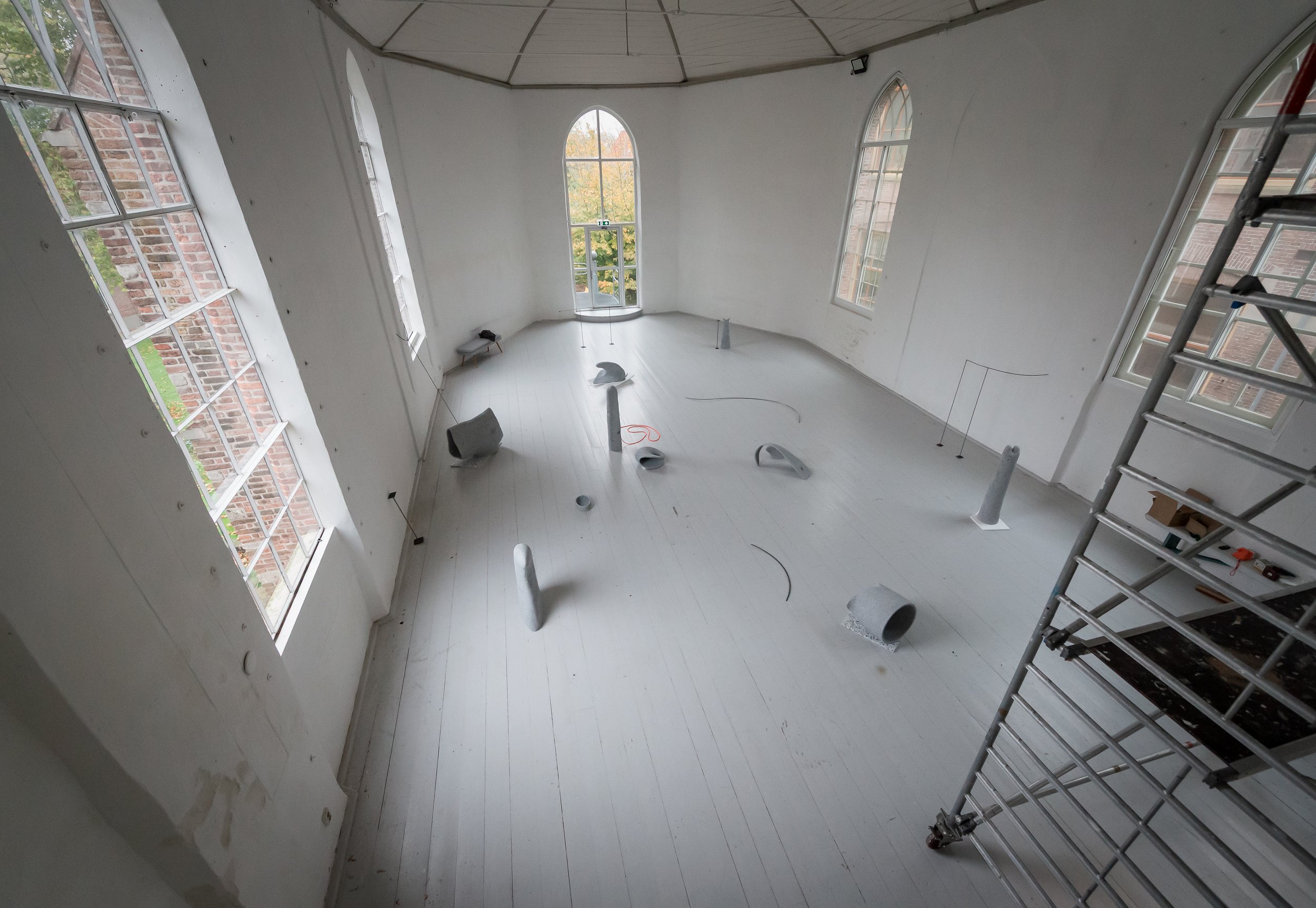
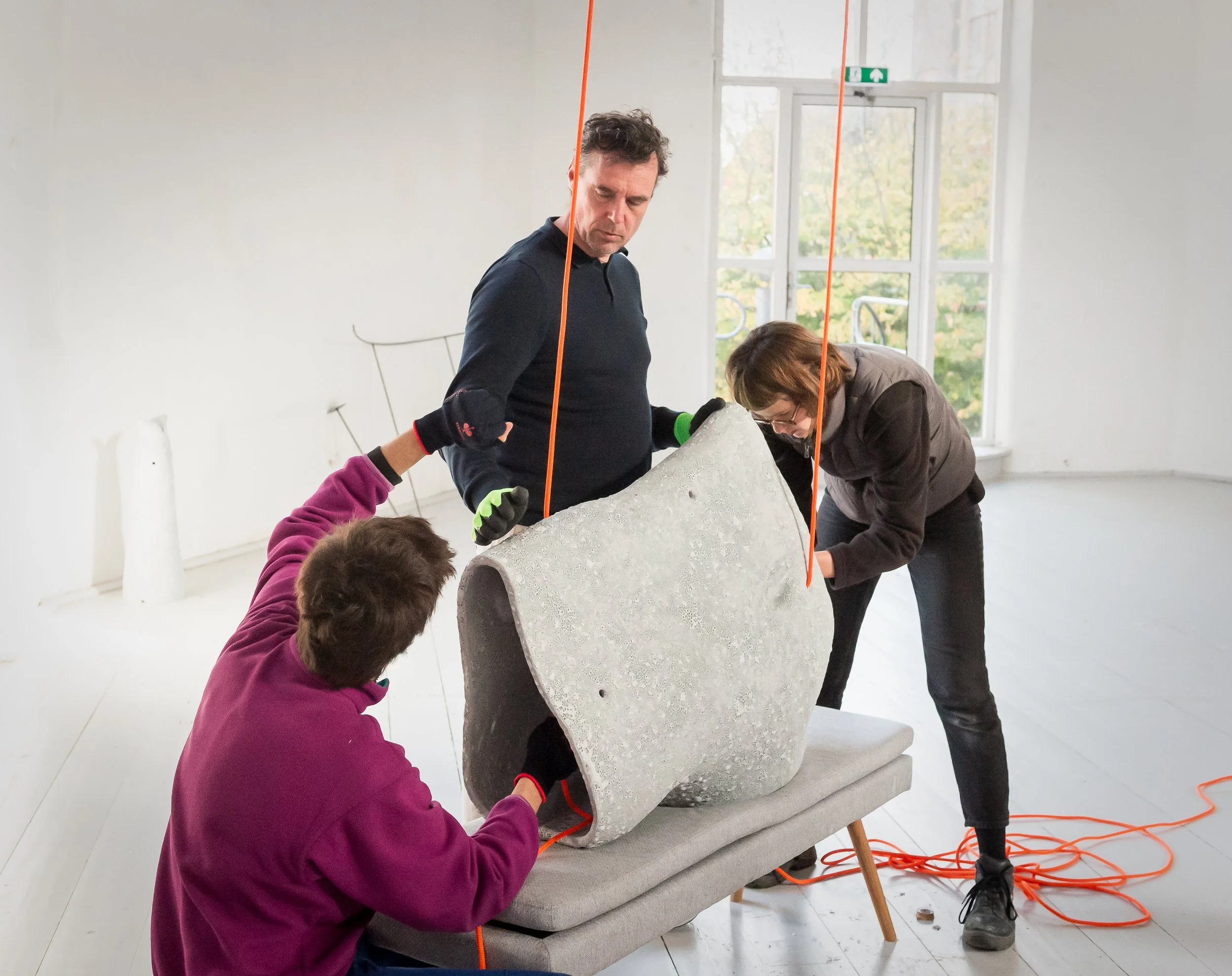
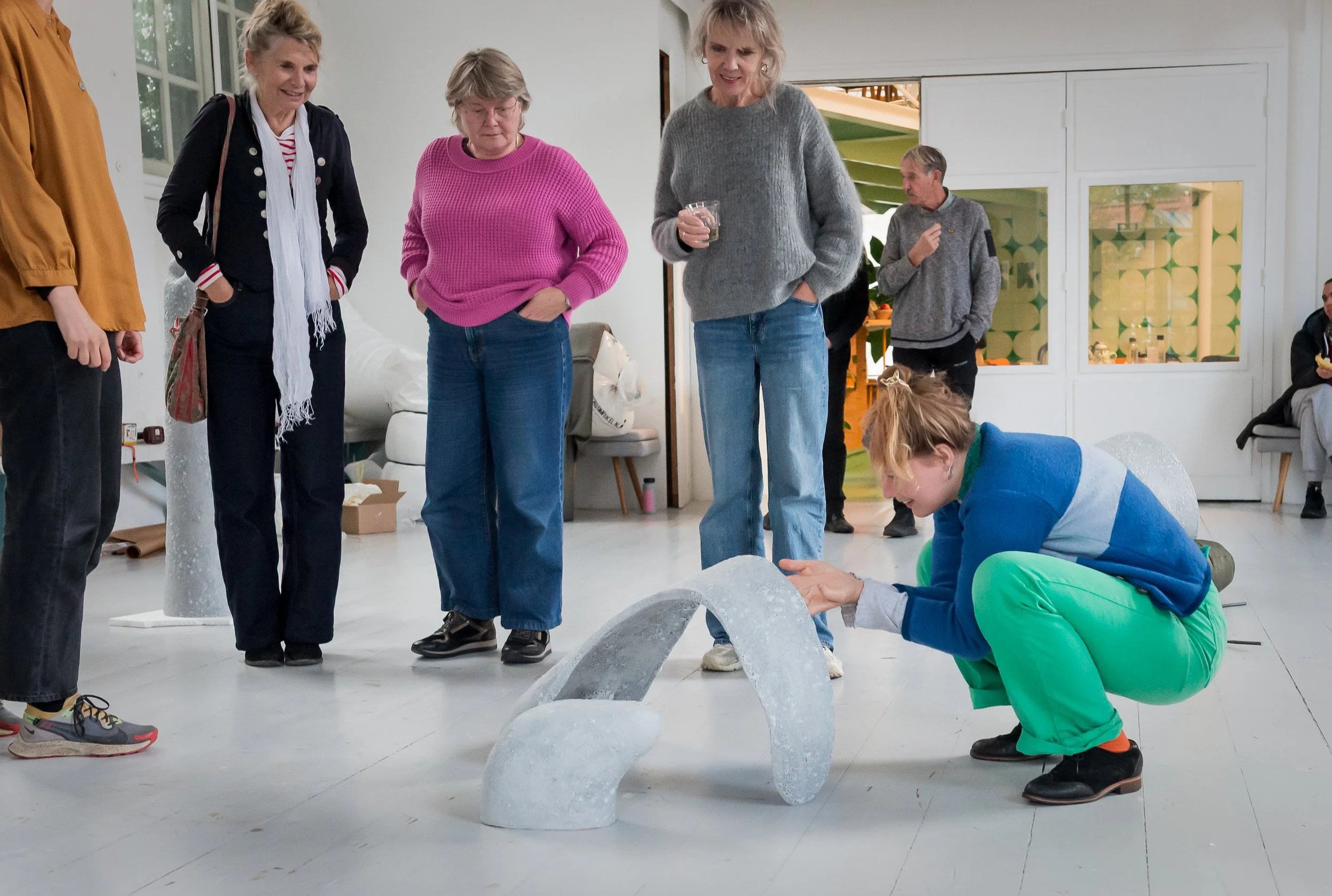
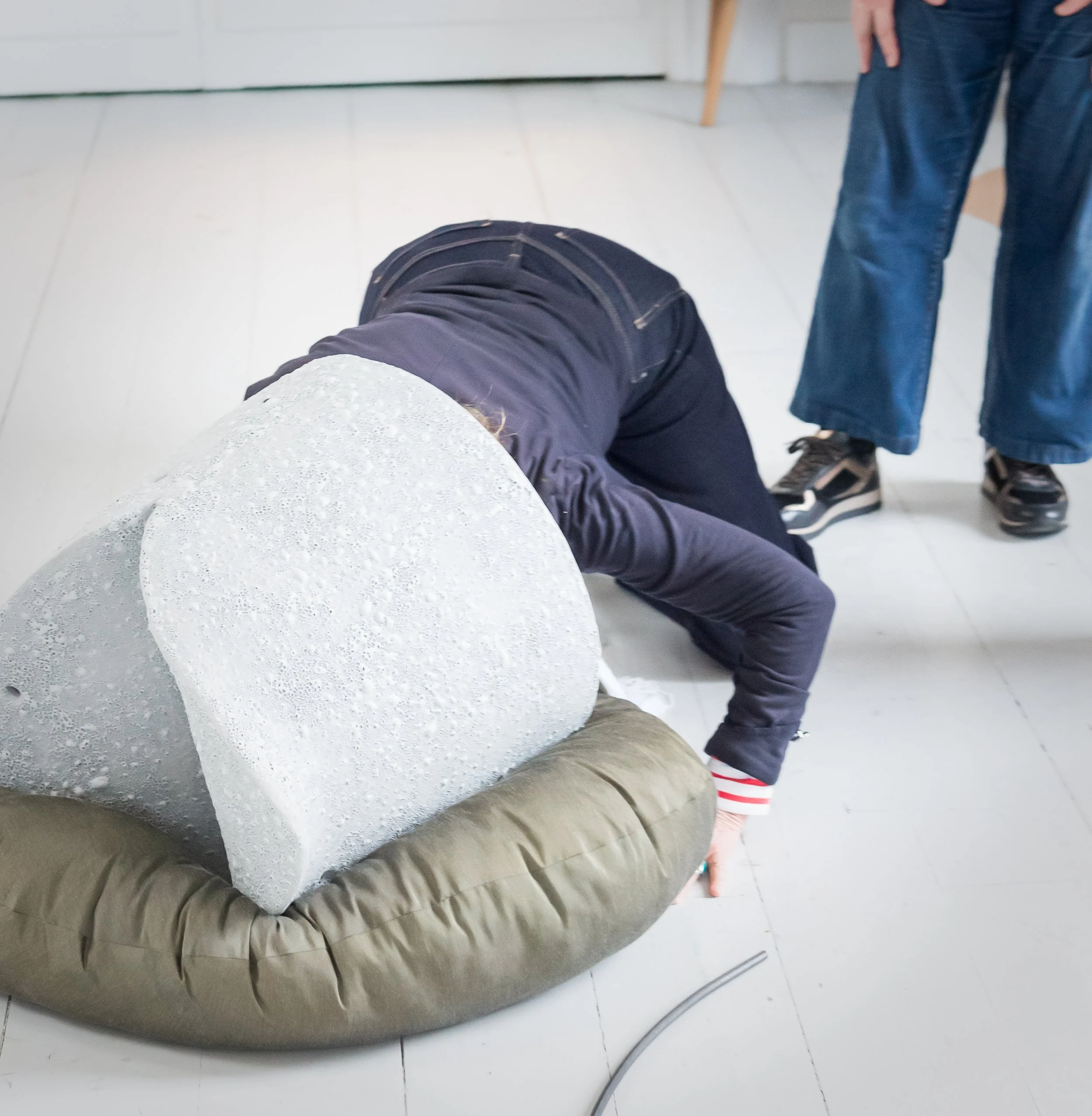
Leonie experimented with materials, particularly ceramics and sound, to weave a new cosmology of moonhorns into the exhibition space. Together with opera singer Nina Guo, Leonie invited teenagers from Hoorn to explore how voices can travel through space, time, and imagination. The workshop began with an introduction to moon bouncing, a radio technology that uses the moon as a reflection surface. Some of the recordings made that day were later sent to the moon. What returned from that lunar journey is interwoven with the original recordings and can now be heard in the chapel.
The ceramics are realised at EKWC.
The metal structures are made in collaboration with Harriet Morley.
The soundscape is made in collaboration with Nina Guo and Jan van Muijlwijk of the CAMRA’s team at Dwingeloo Radio Telescope.

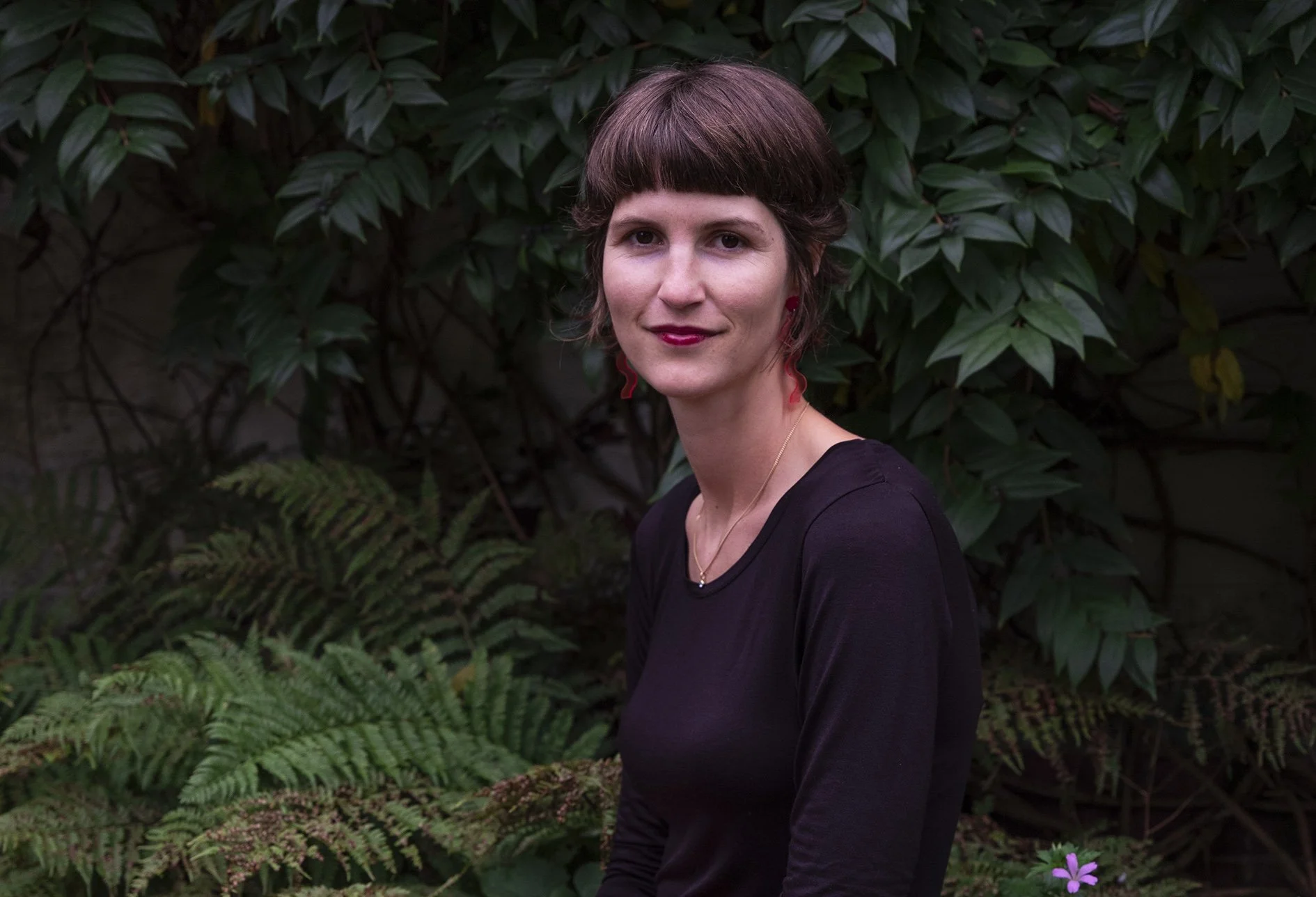
Bio
Leonie Brandner holds an MA in Artistic Research and an advanced course in Ethnobotany and Ethnomedicine from the University of Zurich.
I regularly collaborate with the opera singer Nina Guo to write songs for my installations as a way of voicing ecological concerns in a form that is felt inside the body and makes sense on a level beyond mere logic.
My work has been shown in artist-run spaces and museums across Europe, among others in exhibitions at the Aargauer Kunsthaus (CH), the Barbican Greenhouse (UK), Stroom Den Haag (NL), Liebermann Villa (DE), and the Casino Display (LU).
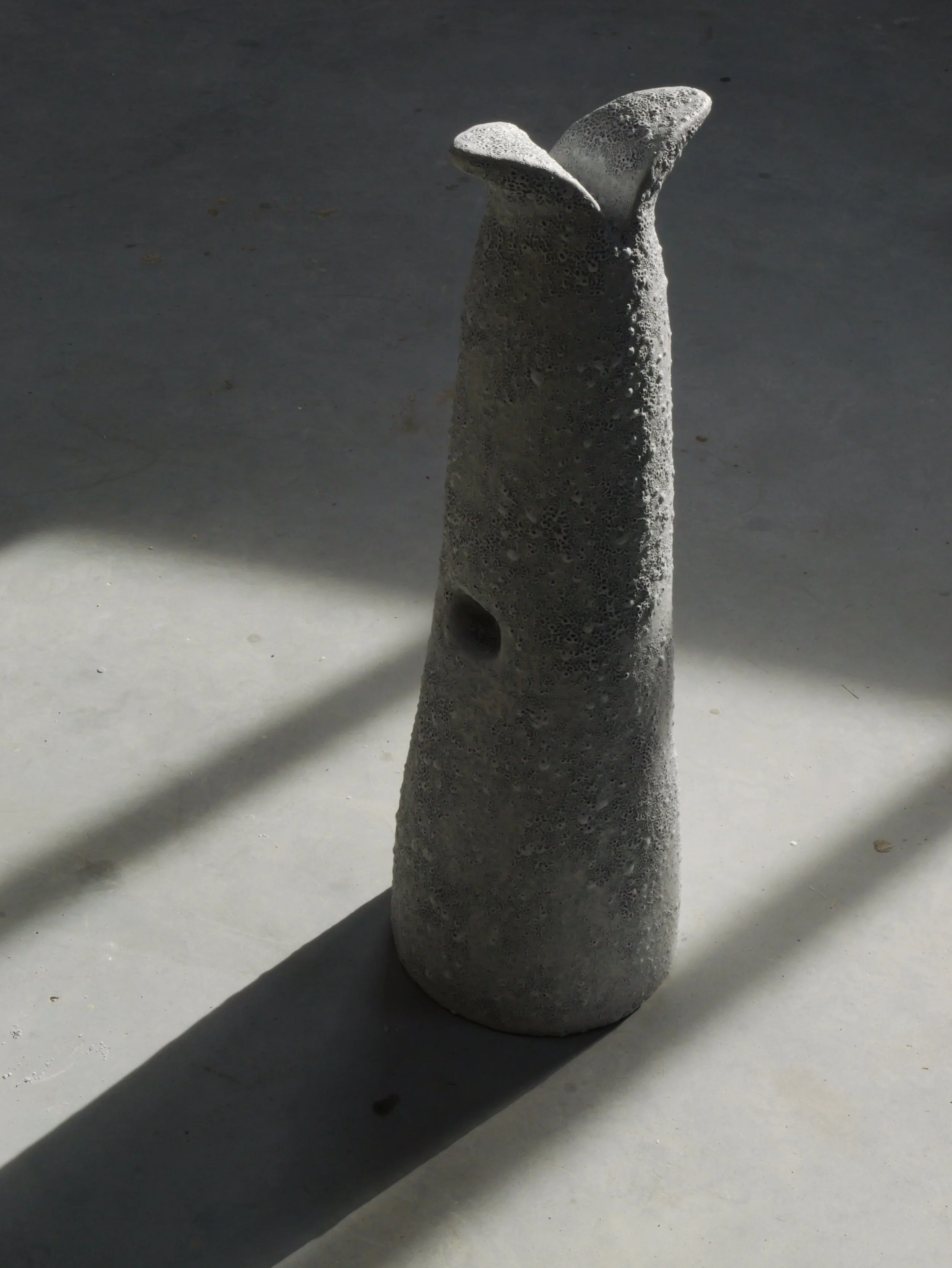

Photo’s: Bart Treuren